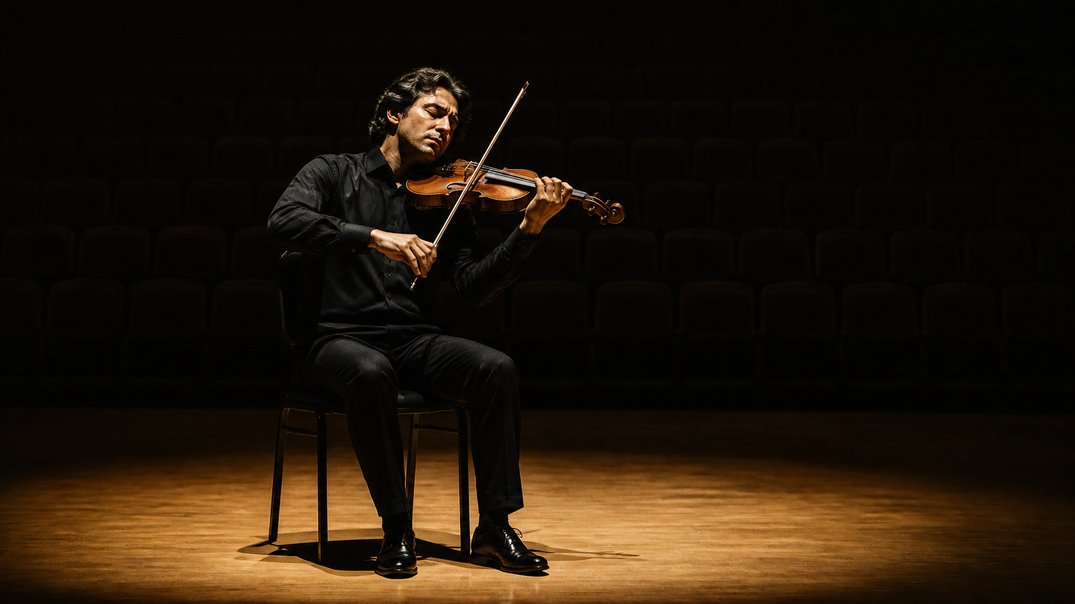
Musicians around the world train through listening, repeating, memorizing, and playing for a teacher, but cultures weight those ingredients differently. Japan’s Suzuki method begins with daily listening and parent support, India’s Hindustani tradition passes music orally from guru to shishya, and research on violinists shows that how you practice matters as much as how long. The habits are real, even when talk of brain training is a metaphor.
Learning Music Like a Mother Tongue: The Suzuki Method
Japanese violinist Shinichi Suzuki began his Talent Education movement in 1945 in Matsumoto, Japan. According to a reference overview, the method is based on how children learn their native language: students hear recordings of the music every day, memorize their repertoire, and keep reviewing every piece they have learned.
Parents supervise daily practice and attend lessons, and children typically start between ages three and five. The overview also lists limits, such as heavy demands on parents, a focus on Western classical repertoire, and evidence that comes mostly from Suzuki-affiliated sources.
Learning by Ear in the Hindustani Tradition
Hindustani classical music is taught as an oral tradition. According to a Royal Holloway event description, training relies on repetition and improvisation, with listening and memorization as central skills, and the relationship between guru and shishya, teacher and student, is at the heart of how the music is passed on.
The tradition has changed over time while keeping its core, and it has resisted documentation and notation. Here, memory is the archive.
Learning by ear also changes what practice looks like. Without a written score to lean on, it follows that the student must hold phrases in memory, repeat them until they are accurate, and bring them back to the next lesson for the teacher to hear and correct.
What Research Says About Deliberate Practice
In a 1993 study of violinists, psychologist Anders Ericsson found that the most accomplished players reported far more deliberate practice: more than 10,000 hours by age 20, compared with about 4,600 for the least accomplished, as Scientific American summarizes.
The popular idea of a 10,000-hour rule went further than the research. Ericsson himself said there is nothing magical about that number, and a later meta-analysis by Macnamara, Hambrick, and Oswald found that deliberate practice explains much less of the difference in expert performance than once assumed. In studies with logged hours, it explained about 5 percent. Practice mattered more in music, games, and sports than in education and professions, and other factors such as motivation, opportunity, and support also play a role.

Despite their differences, the approaches overlap. Listening, repetition, memorization, and a teacher or community show up in Suzuki classrooms and in Hindustani lessons alike.
What differs is emphasis. One tradition builds around recordings and parents, another around oral transmission and a single teacher. Both treat music as a skill that grows through steady, supported repetition.
This is one reason the research on expertise keeps returning to context. The meta-analysis described above found that practice is only one factor among several, so a student with excellent habits but little support may still struggle. For a learner, the practical lesson is to treat practice as a system, with listening, feedback, and encouragement built in, rather than as a count of hours.
Practice Habits Borrowed From Many Traditions
- Listen daily to the music you are learning, as Suzuki students do.
- Repeat small sections slowly before putting them together.
- Memorize pieces so you can play without looking down.
- Review old pieces regularly, since review keeps them alive.
- Learn with a teacher or community who can give feedback.
- Play for others, even a small audience, to make practice feel meaningful.
Common Questions About Musical Practice
What Is the Suzuki Method?
It is a music teaching approach developed by Shinichi Suzuki in Japan that treats learning music like learning a mother tongue, with daily listening, repetition, memorization, and strong parental involvement.
Is the 10,000-Hour Rule True?
Not as a rule. Ericsson said there is nothing magical about 10,000 hours, and a later meta-analysis found that deliberate practice explains much less of expert performance than often claimed.
Does Music Practice Really Train the Brain?
Practice builds skill through repetition and feedback, and researchers continue to study how musical training relates to the brain. Claims that one method rewires the brain deserve careful reading.