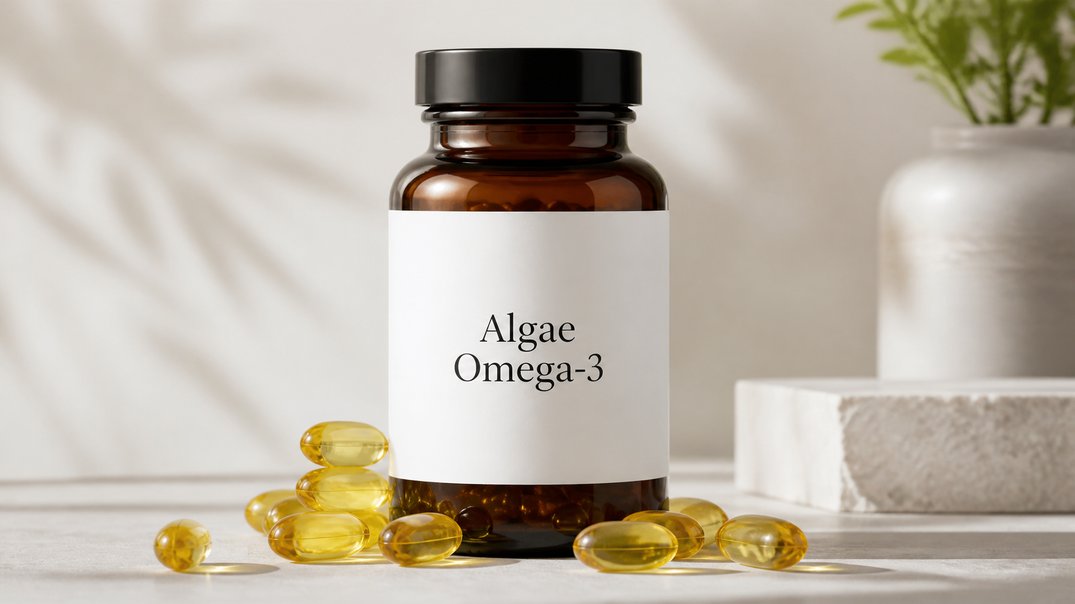
To choose a high-quality algae omega-3 supplement, check five things: clear EPA and DHA amounts, third-party testing, freshness protection, a plant-based capsule, and a transparent brand. These checks take about two minutes and make comparing products easy. Here is your simple shopping checklist.
Start With EPA and DHA Amounts per Serving
The most useful number on the bottle is the milligrams of EPA and DHA per serving, not the total oil. Look for separate lines for each fat on the Supplement Facts panel. The mix varies a lot: in one pilot study, an algal oil provided 595 milligrams of DHA and 21 milligrams of EPA per day.
A commonly cited goal is roughly 250 to 500 milligrams of EPA plus DHA combined per day, and the NIH Office of Dietary Supplements lists algal oil as a vegetarian source of these fats. Once you know your target, the label tells you how many capsules it takes. If a bottle says it contains 1,000 milligrams of algal oil but lists only 300 milligrams of EPA and DHA, the second number is the one that counts.
Look for Third-Party Testing and Certifications
Supplements are not approved by the FDA before they reach shelves, which is why independent testing is such a useful quality signal. Programs such as USP Verified, NSF, Informed Sport, and IFOS evaluate products and look at things like potency, heavy metals, and microbial contamination.
A seal is great, and a lot-specific certificate of analysis is even better. Brands that publish their test results are showing you exactly what is in the bottle.
Check Freshness: Why Oxidation Matters
Omega-3 fats are delicate, and exposure to air, heat, and light can make oil go rancid. Quality brands protect freshness in a few ways: natural antioxidants such as mixed tocopherols (vitamin E) or rosemary extract, dark or opaque packaging, and testing for oxidation markers such as peroxide and anisidine values.
At home, a fresh capsule should smell and taste mild. Store it in a cool, dark place, and check the expiration date before you buy.
Check the Source, Form, and Capsule
Good labels name the algae, such as Schizochytrium, and tell you how the oil is delivered. Algal oil is typically sold in the natural triglyceride form, and many brands say so right on the label.
If you want a fully vegan product, confirm that the capsule shell is plant-based, since some softgels use gelatin. A clear allergen statement and a non-GMO claim are nice extras that signal a careful manufacturer. Bonus points go to brands that explain how they grow and refine their algae, since that kind of openness usually goes hand in hand with quality.
Signs of a Great Algae Omega-3 Supplement
Here is a quick scorecard you can use in the store or online:
- EPA and DHA listed separately in milligrams
- A third-party seal such as USP, NSF, or IFOS, plus a lot-specific certificate of analysis
- Natural antioxidants and dark or opaque packaging
- A plant-based capsule and a clear allergen statement
- A visible expiration date and easy-to-find brand contact information
Your Two-Minute Algae Omega-3 Shopping Plan
Pick your daily EPA and DHA goal, find a product that lists both amounts clearly, and confirm the testing and capsule type. Then compare the cost per serving. With those four steps, you can choose with confidence and enjoy a dependable plant-based source of omega-3.
Choosing Algae Omega-3 Frequently Asked Questions
How can I tell if my algae oil is fresh?
Fresh algae oil should smell and taste mild. A harsh, sharp, or paint-like smell can signal oxidation, so check the expiration date and replace the bottle if it smells off.
Does third-party tested mean the product is certified?
Not always. Some brands run their own tests, while a seal from a program such as USP or NSF means an independent group evaluated the product. Look for the seal and a certificate of analysis.
Is a higher price a sign of higher quality?
Not by itself. Price reflects EPA and DHA concentration, testing, and capsule type, so compare the cost per 100 milligrams of EPA plus DHA instead of the price per bottle.