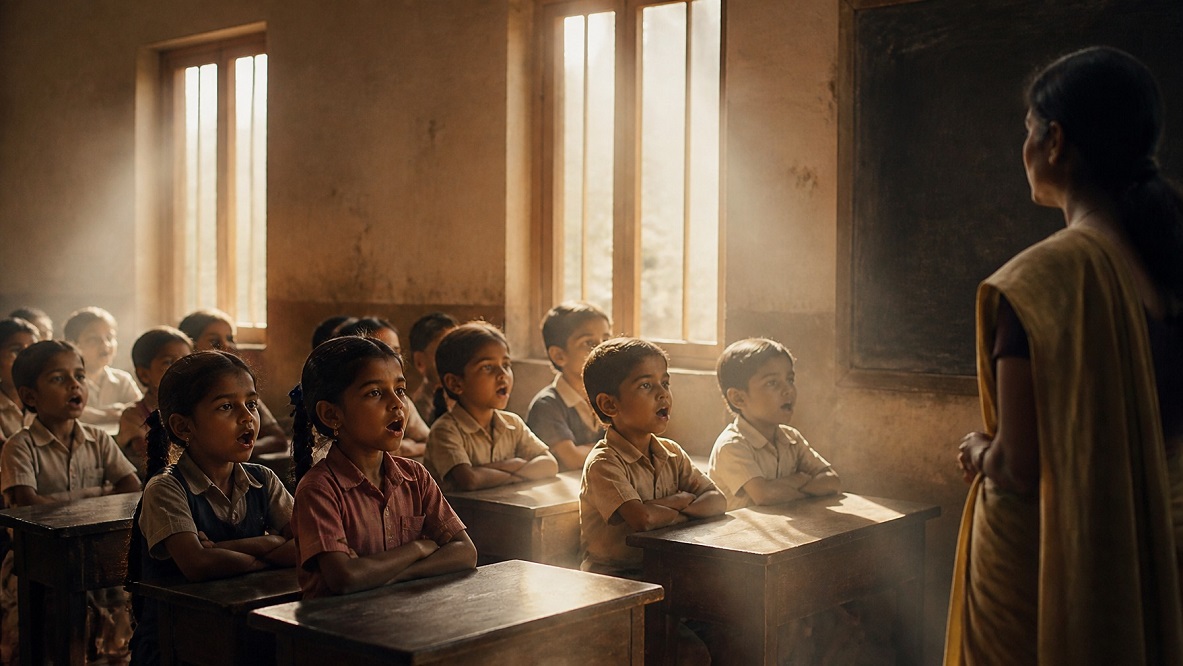
Cultures teach children to remember in different ways: some through chatty storytelling about the child’s own experiences, some through factual questions and moral lessons, some through shared work, and some through recitation. None is the single right way. Each trains children to hold on to what their community values.
Storytelling at the Dinner Table
Cornell developmental psychologist Qi Wang has found that American and Chinese people recall personal memories differently, a pattern that appears in adults and preschoolers, as Cornell’s report on her research explains. American mothers and three-year-olds tended to talk in an elaborative, back-and-forth style centered on the child’s opinions and feelings.
American adults, in turn, described longer, more specific, emotionally rich memories with themselves at the center, and their earliest memories came from around age three and a half.
Why does it matter? Wang notes that memory shapes identity, and that early social experiences set patterns by the preschool years that persist into adulthood. The way a family talks about the past helps teach a child what is worth remembering about a life.

Memory Shaped by Moral Lessons and the Group
In Wang’s research, Chinese mothers asked mostly factual questions and emphasized moral rules and standards of behavior. Chinese adults gave brief accounts of routine, group-based events that were usually emotionally neutral, and their earliest memories came about six months later than the Americans’.
Wang argues that these patterns reflect mainstream cultural values, individual-focused in the United States and group-oriented in China. They are broad tendencies, and families in every culture vary.

Learning by Observing and Pitching In
Psychologist Barbara Rogoff describes another approach, Learning by Observing and Pitching In. Children take part alongside adults in the full range of family and community activities, and they receive feedback during shared work, according to UC Santa Cruz. What they remember is bound up with doing.
When her team repeated a study from 30 years earlier with the same Mayan families, collaboration among members of mother-and-two-child groups had dropped to about half as often. The researchers link the change to less use of the Maya language, more Western schooling and digital technology, and a move from floor mats to chairs and couches.
Even so, the families interacted harmoniously in all but about 5 percent of cases, compared with conflict or resistance more than 20 percent of the time in European American families in similar settings. Rogoff sees that emphasis on harmony as a cultural value.
Memorization as an Honored Skill
In many communities, memory is trained directly through recitation. The Pluralism Project describes memorizing the entire Quran in Arabic as a high honor and a primary goal of Islamic education for children.
UNESCO’s overview of oral traditions describes another route: elders passing stories, songs, and proverbs to children at home and in schools. In these settings, remembering is a shared act that connects a child to a community.
These approaches show that memory is not only a private skill. It is something a community teaches, and what it teaches reveals what the community hopes its children will carry forward.
Ways to Blend These Approaches at Home
- Talk about the day’s events and ask open questions about what your child felt.
- Share family stories, including the lessons they carry.
- Let children help with real tasks, like cooking or gardening, and give friendly feedback.
- Learn a song, poem, or prayer together and say it often.
- Invite grandparents and elders to tell their stories.
- Make recall playful with games, and respect your own family’s style.
Common Questions About Teaching Children to Remember
Do Different Cultures Teach Memory Differently?
Research suggests they do. Studies by Qi Wang found that American and Chinese mothers talk with their children about the past in different styles, and those styles relate to how adults later recall their own lives.
Is There a Best Way to Teach Children to Remember?
No single method is best for every family. Storytelling, shared work, recitation, and moral lessons each strengthen memory for what a community values, and many families blend them.
How Can Parents Use Storytelling to Support Memory?
Ask open questions about what your child saw and felt, add details, and return to the story later. Sharing family stories also links a child’s memories to a larger family history.