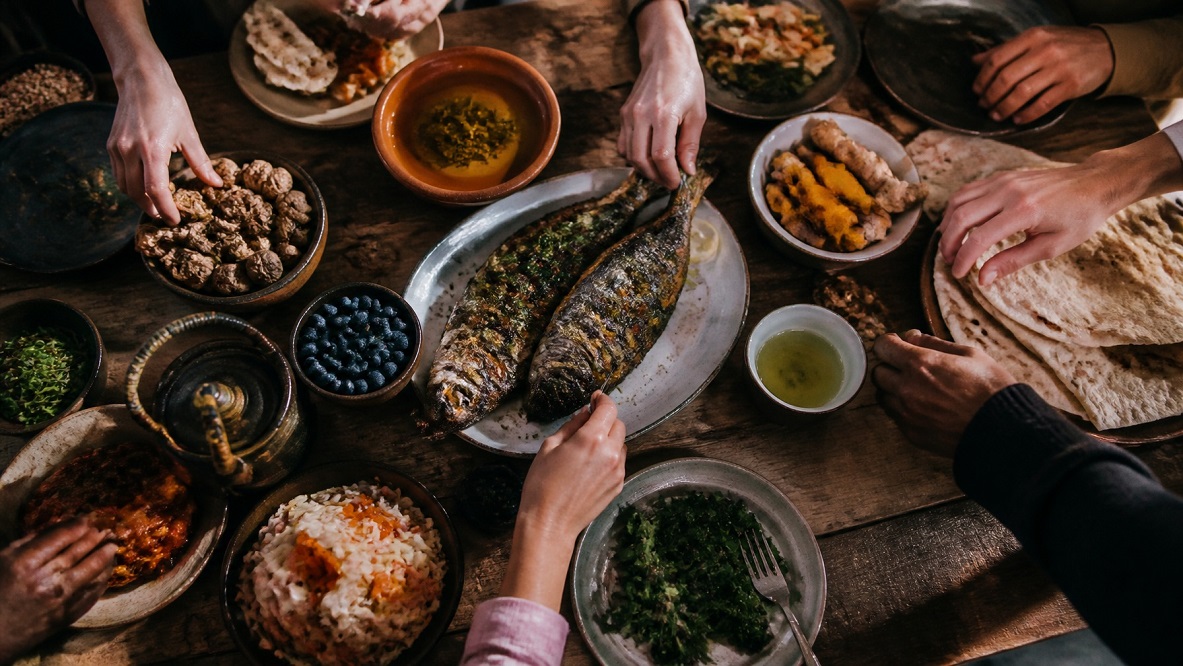
People in many cultures have tied certain foods to sharp thinking, and a few of those traditions line up with modern research. Mediterranean cooks lean on fish, olive oil, and vegetables, Nordic kitchens favor berries, rye, and cold-water fish, and traditional Okinawan meals center on plants and moderation. No single food guarantees a healthy mind, but the shared pattern is a useful guide to eating well for the long run.
Mediterranean Tables: Fish, Olive Oil, and Vegetables
The Mediterranean way of eating revolves around olive oil, fish, vegetables, beans, nuts, whole grains, and fruit, with a little wine in some households. Meals tend to be long and shared, which is a cultural habit worth noticing as much as the menu.
A Harvard Health commentary points to a National Institutes of Health study of more than 7,750 participants followed for five to 10 years. In that study, fish and vegetables stood out as the foods most linked to a lower risk of cognitive impairment. The study was observational, so it shows an association rather than proof, but it fits the Mediterranean story neatly.
Okinawan Traditions: Plants First, Stop at Mostly Full
On the Japanese island of Okinawa, the traditional diet leaned on purple sweet potatoes and plenty of green and yellow vegetables, with tofu as a staple protein and only small amounts of fish and pork, according to an overview from SBS Food.
Okinawans also practice hara hachi bu, a saying that encourages stopping when you are about 80 percent full. It is less a rule than a habit of paying attention to your body. The same overview notes that modern Okinawan eating has shifted toward more meat and fat, a reminder that a food culture is never frozen in time.
Nordic Kitchens: Berries, Rye, and Cold-Water Fish
The Nordic pattern features berries, apples, pears, cruciferous vegetables, rye, oats, barley, rapeseed oil, and fatty fish, while limiting processed meat and sugary products. A 2023 systematic review in Frontiers in Nutrition found that in some Finnish and Swedish studies, closer adherence to this style of eating was linked to better cognitive function or less decline over time.
The authors also noted that the evidence is limited and that more long-term studies are needed. It is best viewed as promising rather than proven.

Look closely and the three traditions have plenty in common. Each is built around plants, includes fish or another modest protein, relies on whole or minimally processed ingredients, and treats eating as part of daily life rather than a performance.
None of them depends on a single exotic ingredient. That is probably the most useful takeaway, and it is good news for anyone who dislikes complicated eating plans.
There is also a social thread. Shared meals, regional ingredients, and slower eating show up in all three, which suggests that how people eat may matter alongside what they eat.
Easy Ways to Borrow These Food Habits
You do not need to move to the coast of Greece or the islands of Japan to borrow the best of these traditions. A few small changes in your kitchen go a long way.
- Eat fish a few times a week, and favor lower-mercury choices over fish such as swordfish.
- Fill half your plate with vegetables at lunch and dinner.
- Swap in olive oil or rapeseed oil for some of your cooking fats.
- Add berries to breakfast and try rye or oat bread.
- Slow down and stop when you feel comfortably full.
Common Questions About Brain Health and Food Cultures
Is there one best diet for brain health?
No single diet has been proven best. Mediterranean, Nordic, and traditional Okinawan eating all emphasize plants, fish or modest protein, and whole foods, so the shared pattern matters more than any one label.
Which foods show up in most brain health food traditions?
Vegetables, fish, whole grains, and plant oils such as olive oil or rapeseed oil appear again and again. Berries and nuts are common too.
Can supplements replace these foods?
Supplements are not a substitute for a varied diet. If you are thinking about adding one, talk with a healthcare professional first.