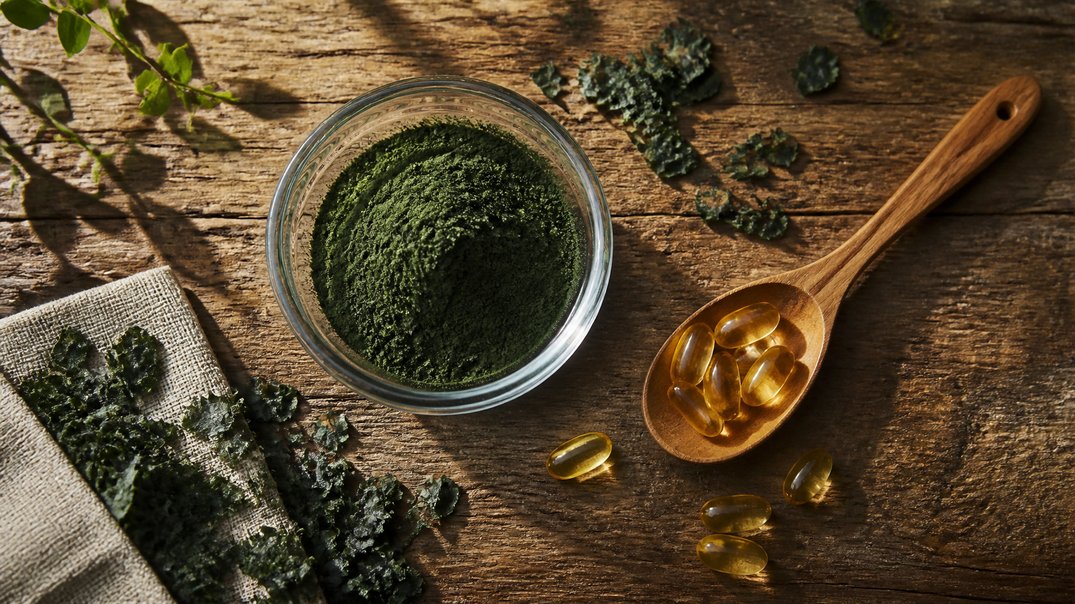
Algae omega-3 gives athletes who avoid animal products a direct source of EPA and DHA without fish. Athletes often run low in these fats, and one sports nutrition review calls 1 to 3 grams of EPA plus DHA daily, including food, a reasonable goal. Here is how to fit algae oil into your training routine.
Why Plant-Based Athletes Often Need an EPA and DHA Source
Fatty fish and certain algae are the only naturally rich sources of EPA and DHA. Plant foods give you ALA, which your body converts into EPA and DHA only in small amounts. Researchers have found low omega-3 status among many athletes, including omnivorous college football players.
For an athlete who skips fish entirely, an algae supplement is the most direct fix, and it takes seconds to add to your day.

What Omega-3 Can Do for Your Training
A systematic review of 15 studies found that omega-3 supplementation may help recovery from delayed onset muscle soreness and improve muscle function. A broader review of EPA and DHA in sports says the evidence broadly supports benefits for athletes, and more so for amateurs.
Think of omega-3 as a recovery and wellness ally rather than a muscle builder. It supports the habits that do the heavy lifting: consistent training, enough protein, and good sleep.
Algae Oil Moved the Numbers in College Football Players
Researchers tested five weeks of DHA-rich algae oil in Division I college football players. At baseline the players had a low omega-3 index of 4.3 percent. They took an average of about 1,125 milligrams of DHA plus EPA per day, and after five weeks both their omega-3 index and their ratio of arachidonic acid to EPA improved.
That is a strong sign that algae oil can raise omega-3 status in active people, and these players were not even plant-based. The study was short and measured blood markers, not game performance, but the result is encouraging.

How Much Algae Omega-3 Should Athletes Take?
A Sports Science Exchange review suggests that 1 to 3 grams of EPA plus DHA daily, counting both food and supplements, is a reasonable goal with a low risk of side effects. Many algae supplements deliver a few hundred milligrams per serving, so reaching that range may take a few capsules or a concentrated product.
Start at the lower end and build up. A sports dietitian can help you fine-tune the amount, and it is smart to check with your doctor if you take blood thinners or anti-inflammatory medication.
Practical Tips for Choosing and Taking Algae Omega-3
- Choose a product that lists both EPA and DHA if you want both, since many algae oils are DHA-heavy.
- Look for third-party testing. If you compete under drug testing rules, look for a sport-specific certification such as NSF Certified for Sport or Informed Sport.
- Take it with a meal that includes some fat, and keep it consistent through training and rest days.
- Store it in a cool, dark place so the oil stays fresh.
Where Algae Omega-3 Fits in a Vegan Athlete’s Routine
Treat algae omega-3 as part of your foundation. Pair it with enough protein, calories, and sleep, and give it a few months of consistent use. It is one of the easiest upgrades a plant-based athlete can make.
Algae Omega-3 for Vegan Athletes Frequently Asked Questions
Will algae omega-3 improve athletic performance?
Research suggests it may help with recovery from muscle soreness and support muscle function. It is best viewed as a recovery and wellness helper, not a muscle builder.
Do vegan athletes need more omega-3 than other athletes?
There is no vegan-specific recommendation. One sports nutrition review suggests 1 to 3 grams of EPA plus DHA daily from food and supplements for athletes in general, and plant-based eaters usually need a supplement to get there.
Is algae oil as effective as fish oil for athletes?
Research is still growing. A five-week study found that algae oil improved the omega-3 index of college football players, and a pilot study has compared algal and fish oils in endurance athletes.