
Telehealth vs. in-person visits is not a contest, since each format has strengths. Telehealth saves travel and fits into busy days, while in-person visits allow hands-on exams and tests. Here is how they compare, when each tends to work best, and questions that help you choose the right format for your needs with your clinician.
When Telehealth Works Especially Well
Mayo Clinic lists many situations where virtual care shines, including colds and flu, sinusitis, rashes, insect bites, constipation, urinary tract infections with a lab test, and mental health conditions. It is also well suited to medication monitoring and adjustments, and to follow-up for diabetes, weight-loss medications, high blood pressure if you have a home cuff, cholesterol, and low thyroid. The benefits are practical. You save drive time, avoid bad weather, keep care continuous with your team even while traveling, and stay home when you might otherwise spread illness in a waiting room. Many people also find it easier to fit a short visit into a work break, which makes it simpler to keep up with routine follow-ups and stay on track with their plan.
What In-Person Visits Do Best
In-person visits offer hands-on care. Mayo Clinic notes that suspected fractures or infections usually need a hands-on exam, assessment, or direct treatment. A video visit can include a virtual exam, and the American Heart Association explains that you may be asked to stick out your tongue, show a rash, or move a limb, yet the clinician can only assess what the camera shows. A telehealth provider may then recommend bloodwork or an in-person follow-up. Many people combine both formats, using video for routine check-ins and the office when a hands-on exam or test is needed. That mix gives you convenience most of the time and thorough, in-person care whenever your situation calls for it.
Questions to Help You Choose Between Telehealth and In-Person Care
A few questions make the choice easier. Mayo Clinic suggests a reliable internet connection and a private space for video visits, plus notes and photos prepared in advance. Privacy is no reason to hesitate, because HHS states that telehealth visits are as private as in-person visits. Your clinician can also tell you which format suits your situation, and you can switch between formats as your needs change over time. Bring your questions either way. Ask yourself:
- Do I need a hands-on exam or a test today?
- Is this a new concern or a routine follow-up?
- Do I have a reliable connection and a private space?
Frequently Asked Questions
Is Telehealth as Private as an In-Person Visit?
HHS states that telehealth visits are as private as in-person visits and that HIPAA protects what you share. Choose a private location and use your provider’s patient portal for messages.
Can Telehealth Replace In-Person Care Completely?
Not always. Mayo Clinic says suspected fractures or infections usually need a hands-on exam, and a telehealth provider may request bloodwork or an in-person follow-up. Many people use both formats.
Which Is Better for Follow-Up Visits?
Telehealth often works well. Mayo Clinic lists follow-up for diabetes, weight-loss medications, blood pressure, cholesterol, and thyroid care among common virtual uses. Your clinician helps you decide what fits.
Can I Send Photos Before a Video Visit?
Yes. Mayo Clinic says you can upload photos or videos, such as of a rash, when you book a video visit. Preparing notes and questions in advance also helps the visit go smoothly.
Good to Know
Telehealth is not a substitute for emergency care. Go to the emergency department or call 911 for trouble breathing, chest pain, or other severe symptoms. Conditions that need a hands-on exam, such as suspected fractures or infections, usually call for an in-person visit. Tell your clinician about all medications, allergies, and conditions, and mention if you are pregnant or breastfeeding. Seek urgent care for hives, swelling, or trouble breathing. Avoid sites that sell prescription drugs without a prescription.
Find Your Best Fit With a Licensed Clinician
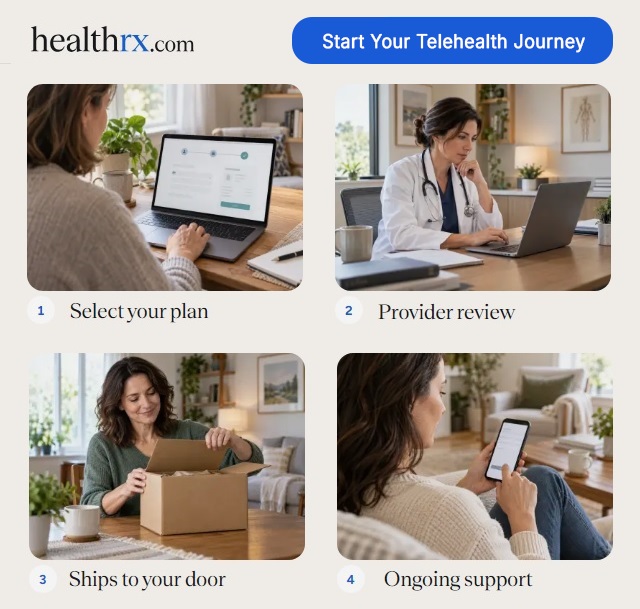
Not sure which format fits? Start with an online assessment, have an independent licensed clinician review your health history, and, when a prescription is appropriate, receive your medication from a licensed pharmacy that delivers to your door. Explore your options today and find the approach that suits you.
This article is for education only and is not medical advice.