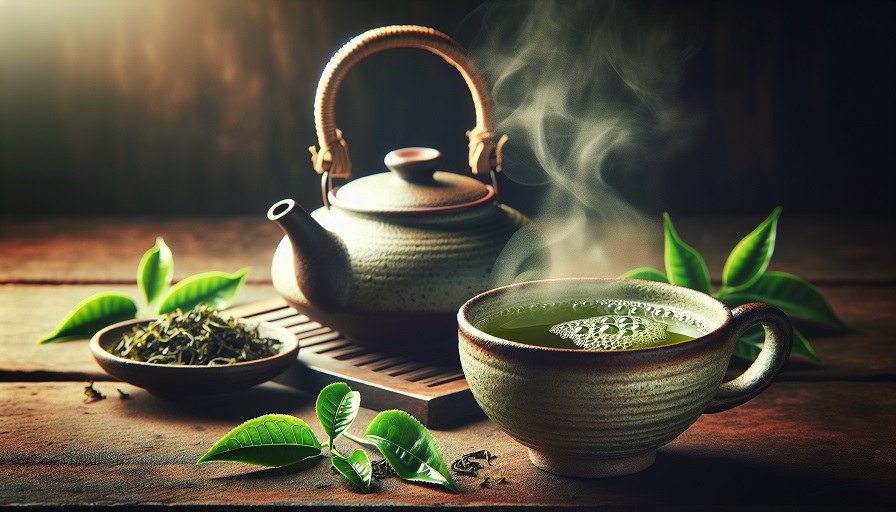
L-theanine is an amino acid found almost exclusively in tea. Japanese scientists identified it in 1949, but tea drinkers in Asia had prized the calm, steady feeling of a good cup for centuries before anyone could name the compound. In many ways, the science arrived after the culture had already made up its mind.
Tea Culture Before the Science
Tea traveled from China to Japan over many centuries, and Zen Buddhism shaped how the Japanese thought about it. The Zen priest Eisai, who returned from China around 1191, wrote in praise of tea and helped spread the powdered form that became matcha.
Accounts say monks drank matcha to stay alert yet relaxed during long meditation, and that samurai drank it at tea ceremonies, according to an industry overview of L-theanine’s history. Treat those details as tradition rather than hard record, but they show how closely tea and focus were linked.
Tea ceremonies, known as chanoyu in Japan, turned preparation into a form of mindfulness. Every step, from whisking the powder to turning the bowl, asks for attention. Whether or not any single compound deserves the credit, the ritual itself trains focus.
How L-Theanine Was Discovered
According to the National Center for Advancing Translational Sciences, L-theanine was first identified in green tea in 1949. A year later, researchers in Kyoto isolated it from gyokuro, a prized shade-grown tea. Japan approved it for use in foods in 1964, including drinks and herbal teas.
The name comes from Thea sinensis, an older botanical name for the tea plant. It is a fitting origin for a compound so tied to one drink.
Why Shade-Grown Teas Like Matcha Stand Out
Growers who shade tea plants before harvest, as they do for matcha and gyokuro, end up with leaves higher in L-theanine, according to this reference entry on theanine. Farmers cover the plants for several weeks, a labor-intensive step that helps explain why these teas cost more.
L-theanine also contributes to the savory, brothy umami flavor of green tea. Shaded teas are known for that mellow, savory character, which is part of why gyokuro is treated like a treat rather than an everyday brew.

L-Theanine Today, From Teacups to Capsules
Now L-theanine is sold as a stand-alone supplement and added to drinks, gummies, and other products. Most supplement-grade L-theanine is made by fermentation rather than extracted from tea leaves. A single cup of tea typically contains less than a supplement serving, so the two experiences are not the same. L-theanine is also one of the ingredients in Mind Lab Pro.
If you drink tea mainly for the ritual, you may not need anything beyond a good kettle. If you are curious about supplements, read the label for the amount per serving, and ask a healthcare professional first if you take medication or have a health condition.
Simple Ways to Enjoy Tea Culture Yourself
You do not need a formal ceremony to borrow the best part of tea culture. A few small choices can turn an ordinary cup into a pause that helps you settle in.
- Brew a cup of gyokuro or matcha and drink it slowly, without a screen in front of you.
- Use water that is hot but not boiling for green tea to avoid bitterness.
- Set aside a regular tea break to mark the shift into focused work.
- Remember that most teas contain caffeine, so adjust the amount if you are sensitive.
Common Questions About L-Theanine and Tea
Is L-theanine only found in tea?
It is found mainly in tea made from Camellia sinensis. Small amounts also occur in a few other plants and in some mushrooms.
When was L-theanine discovered?
Scientists identified it in green tea in 1949, and researchers in Kyoto isolated it from gyokuro leaves in 1950.
Which teas have the most L-theanine?
Shade-grown teas such as matcha and gyokuro are known for higher levels, because shading the plants before harvest increases L-theanine in the leaves.