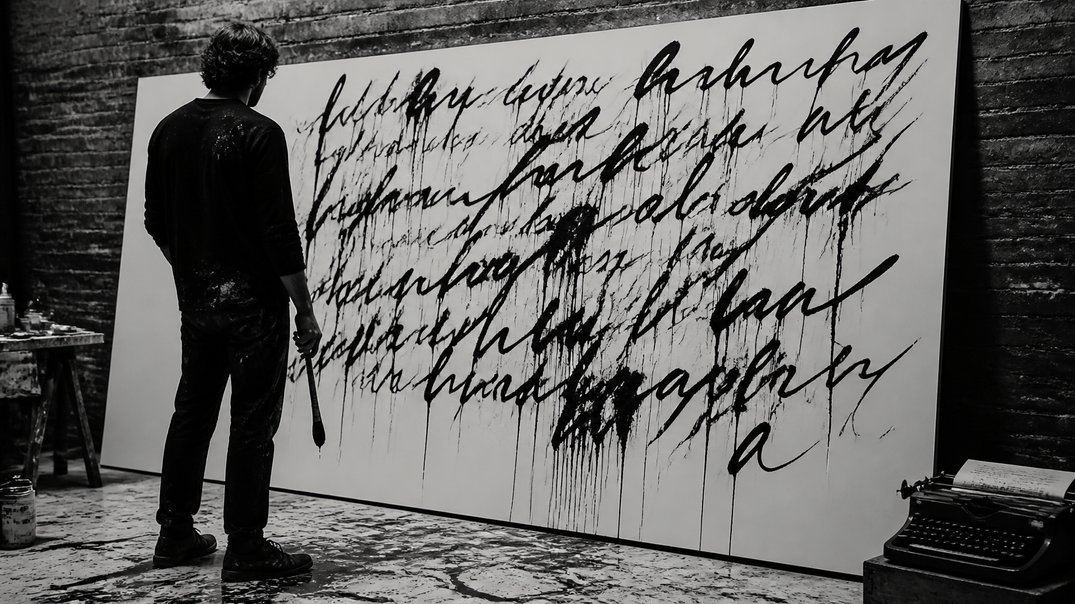
Is creativity a gift that arrives or a habit that is built? Cultures answer differently, and so do individual artists within the same culture. Ancient Greek poets asked the Muses to speak through them, while many modern writers swear by fixed daily hours. Cross-cultural research offers some hints about where emphasis falls, but it also shows why a neat East-versus-West split is too simple.
Inspiration as a Gift From Outside
In ancient Greek poetry, the Muses were goddesses believed to be the source of the knowledge and stories carried in song. According to a reference overview, the Odyssey opens by calling on them to tell the story, which presents the poem as their gift and not the poet’s own invention. Later poets, including Virgil, kept the convention.
The Romantic movement carried a similar idea into modern Europe. As a reference article on literary genius explains, Romantics saw genius as far superior to skill, a force beyond the writer’s control. Poet James Russell Lowell later summed up the distinction: talent is what a person controls, while genius is what controls the person.
Discipline as the Daily Work
Many working artists tell a different story. Haruki Murakami keeps a strict schedule while drafting a novel and sees the repetition itself as essential, a kind of self-hypnosis, as Open Culture summarizes. Isabel Allende begins every book on the same date and shows up daily, trusting that inspiration will come even though the early weeks are often unproductive, according to The Marginalian.
Notice that both ideas live in the same person. Allende’s ritual is discipline, yet she describes it as an invitation to inspiration. In practice, the two are partners more often than rivals.
What Cross-Cultural Research Suggests
A mini-review in Frontiers in Psychology compares research on creativity across cultures. It reports that Western definitions tend to emphasize creative processes and products, while Eastern definitions tend to emphasize the creative spirit and the person, including self-expression and enlightenment.
It also reports that Westerners more often associate creativity with breaking from tradition, while people in Eastern settings more often see it as reinterpreting or rediscovering tradition. Eastern models of the creative process, such as one drawn from the Yoga Sutras, give more weight to sustained effort, personal insight, and mindfulness. The paper does not frame these findings as effort versus inspiration, so that reading is an interpretation, not a conclusion of the authors.

Why the Contrast Is Too Simple
The same review warns that the East-West split is a simplification, since the groupings span very different countries. It is a mini-review without a described systematic search, and many claims rest on a few older studies, often with Chinese samples. The authors also suggest that some differences may reflect how creativity is defined and measured, not differences in actual creative ability.
A survey of Chinese English teachers published by researchers at the University of Aberdeen shows how mixed the picture can be. Teachers rarely chose respect for tradition as a sign of a creative student, and few endorsed accepting pain and difficulty. The authors note that the sample was recruited through social media and is not representative.
Even within a tradition, creativity can combine both poles. UNESCO’s description of carpet weaving in Fars Province, Iran explains that skills pass orally from mothers to daughters, and that skilled daughters are encouraged to add their own innovations inspired by nature and personal experience. Inherited discipline and personal inspiration sit in the same craft.
Borrow From Both Views
- Keep a regular time for creative work, even when you do not feel inspired.
- Leave room for surprise by noting ideas that arrive away from your desk.
- Study the tradition you work in before trying to break from it.
- Treat early drafts as practice, not as proof of talent.
- Ask whether a claim about “national creativity” comes from a large, representative study.
Common Questions About Creativity and Culture
Is Creativity Inspiration or Hard Work?
Most creators describe both. Writers such as Murakami and Allende rely on routine, while traditions like the Greek Muses frame creativity as a gift. The two often work together.
Do Eastern and Western Cultures Define Creativity Differently?
Some research suggests differences in emphasis, such as breaking with tradition versus reinterpreting it, but the evidence is mixed and the East-West split is a simplification.
Can Creativity Be Measured Fairly Across Cultures?
It is difficult. Researchers note that test stimuli, language, and scoring methods can be culturally bound, which may affect comparisons.