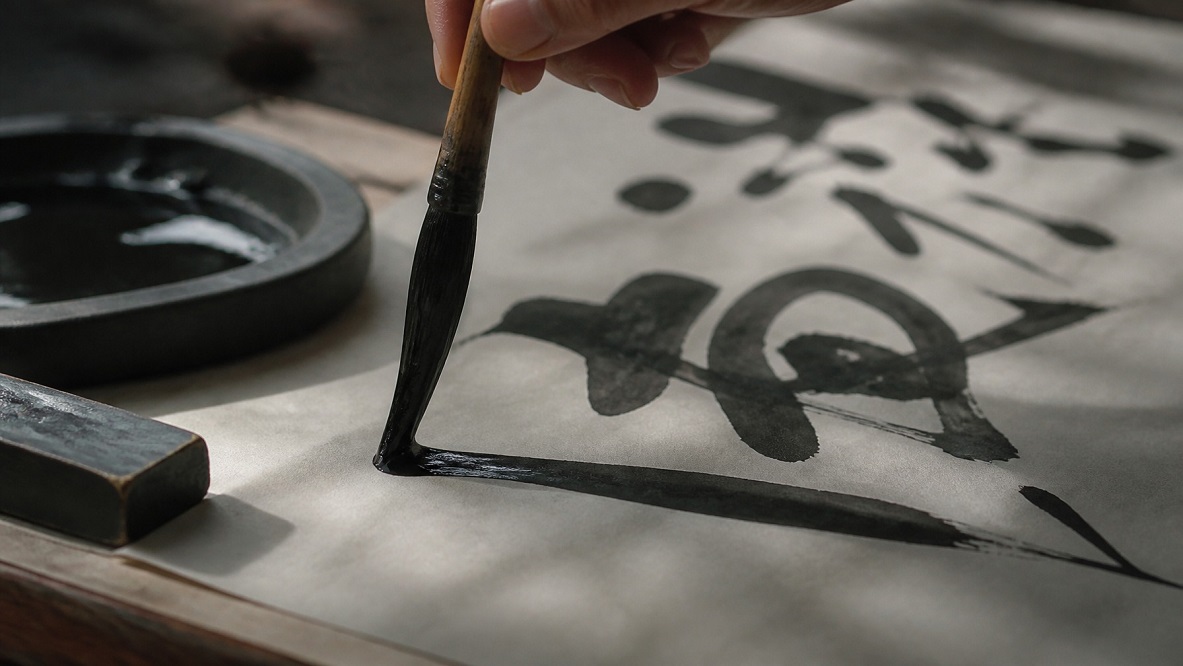
In China, Japan, and Korea, calligraphy has long been treated as more than handwriting: it is a craft that asks for steady posture, a calm mind, and full attention to each stroke. Many practitioners describe it as a form of meditation, though the calming claims come from tradition and personal accounts, not lab studies. What is well documented is how seriously these cultures treat the discipline of the brush.
Chinese Calligraphy as Discipline and Self-Expression
UNESCO describes Chinese calligraphy as more than a tool for communication, written with brushes in five script styles: seal, official, cursive, running, and regular. It is taught through master-apprentice instruction and in school curricula, and it was inscribed on UNESCO’s Representative List of the Intangible Cultural Heritage of Humanity in 2009.
The Metropolitan Museum of Art’s essay on Chinese calligraphy explains that the art has strict conventions, including fixed stroke orders and careful balance, and compares the calligrapher to a dancer who masters set movements before expressing personal vitality. Students first imitate earlier masters and later transform those models into their own style.
Shodo and the Path of the Brush in Japan
A document from the Embassy of Japan describes shodo, the path of writing, as one of several Japanese paths, along with tea, flower arranging, and archery. In these arts the process matters more than the finished object, and the focus they require is considered similar to Zen meditation.
A stroke cannot be corrected once it is made, and characters follow a set stroke order. Japanese children study shodo for six years, starting in the third year of primary school, so the practice is woven into everyday education.
Seoye in Korea: Mindfulness, Patience, and Introspection
The Korea Institute at the Australian National University describes Seoye, or Korean calligraphy, as a spiritual journey that encourages mindfulness, patience, and introspection. The word itself means writing and painting.
Historically it was a scholarly pursuit that reflected a person’s education and moral character. The practice centers on the Four Treasures of the Study: the brush, the ink stick, the paper, and the ink stone, and the article says repetitive brushstrokes are said to bring calm and clarity.

Preparing the Mind Before the First Stroke
Teachers often describe preparation as part of the meditation. One Kyoto studio’s guide to shodo describes grinding solid ink as a time to settle the spirit, and recommends a straight back and relaxed shoulders. It also reminds writers to breathe, since people often hold their breath while concentrating.
A review of the book Brush Meditation links the practice to the Zen tradition, quoting the saying that a correct mind produces a correct brush stroke. These are practitioners’ impressions, and the guide itself offers no studies to back the calming claims.
Try Brush Practice at Home
Starting does not require special equipment. The traditions above suggest that the value lies in the attention you bring to repetition, not in producing a beautiful page, so it helps to treat early attempts as practice rather than finished work. Even a simple brush pen and a stack of paper are enough to begin.
- Set up a quiet table with a brush, ink, and paper, or begin with a brush pen.
- Sit with a straight back and relaxed shoulders.
- Breathe slowly, and notice if you are holding your breath.
- Repeat a single stroke many times before moving on.
- Copy a model before inventing your own style, as students of the tradition do.
- Accept each stroke as it lands, and move on without correcting it.
- Start with ten minutes, and look at your work without judging it.
Common Questions About Calligraphy and Meditation
Is Calligraphy a Form of Meditation?
Many practitioners and teachers describe it that way, and Japanese sources link its focus to Zen meditation. The benefits described come from tradition and personal experience, not from controlled studies.
What Are the Four Treasures of the Study?
They are the brush, the ink stick, the paper, and the ink stone, the core tools of East Asian calligraphy.
Where Should a Beginner Start With Brush Calligraphy?
Many teachers begin with basic brush control and copying models. One Kyoto guide notes that liquid ink is easier for beginners than grinding solid ink.