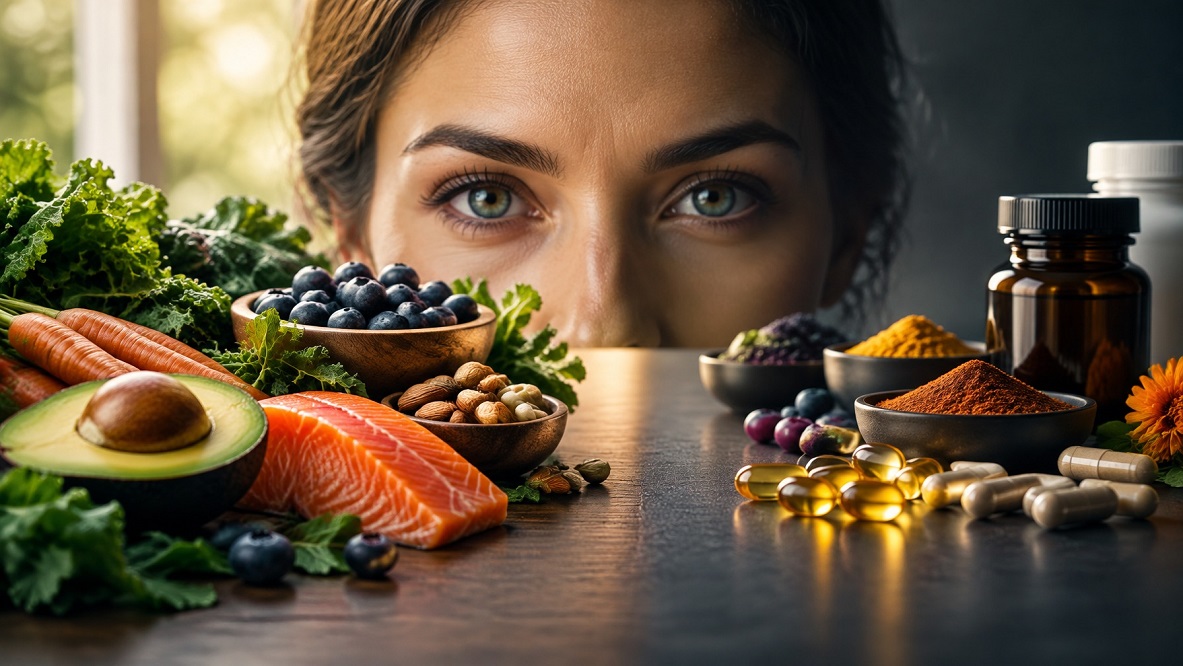
Whole-food eye supplements use dried, powdered fruits and vegetables to deliver nutrients in their natural plant matrix, whereas extract-based eye supplements isolate and concentrate specific active compounds – such as lutein from marigold petals or anthocyanins from bilberries – to guarantee exact, research-backed potencies in every capsule. Whole-food powders provide broad phytonutrient cofactors, while standardized extracts give your retina reliable clinical doses without requiring giant handfuls of pills. Combining targeted extracts with supportive whole-fruit powders offers the best of both worlds for daily vision care.
What Whole-Food Eye Supplements Bring to the Table
Whole-food supplements start with real botanicals – think freeze-dried blackcurrants, kale powder, carrot root, or crushed berries – gently dehydrated and milled into a fine powder. Because nothing is stripped away except water, these powders keep the plant’s original spectrum of fiber, trace minerals, flavonoids, and gentle cofactors intact.
Fans of whole-food nutrition appreciate that nutrients in nature rarely travel solo. A whole dark berry contains dozens of overlapping polyphenols that work alongside vitamin C and organic acids. However, whole-food powders come with a practical catch: concentration. Natural plants are mostly water and structural fiber, which means a single capsule of dried spinach or bilberry powder holds only tiny milligram amounts of the key pigments your eyes actually store in the macula.
How Extract-Based Eye Supplements Deliver Precision Potency
Extract-based supplements take a targeted approach. Manufacturers use gentle extraction methods to pull out the exact bioactive molecules linked to visual performance and concentrate them to a guaranteed percentage – a process called standardization.

For example, rather than packing 500 milligrams of raw marigold petals into a capsule and hoping for the best, a standardized marigold extract concentrates lutein and zeaxanthin to exact clinical levels. The same principle applies to European bilberry or blackcurrant extracts calibrated to 25 percent anthocyanins, or Haematococcus pluvialis microalgae concentrated for natural astaxanthin. Standardization eliminates seasonal crop guesswork, ensuring that the capsule you take in January delivers the exact same retinal support as the one you take in July.
Clinical vision trials – including landmark studies summarized by the National Eye Institute – rely on measured, consistent milligram doses of specific carotenoids and antioxidants because researchers need predictable intake to verify real visual outcomes.
Key Differences at a Glance
Understanding how these two formats compare makes reading supplement labels far easier when you are shopping for reliable eye support.
- Active Ingredient Potency: Extracts deliver concentrated, standardized levels of lutein, zeaxanthin, astaxanthin, and anthocyanins in a compact serving. Whole-food powders carry much lower concentrations per milligram of powder.
- Batch-to-Batch Consistency: Standardized extracts guarantee the same active percentage in every bottle regardless of harvest weather or soil shifts. Whole-food powders naturally fluctuate from crop to crop.
- Capsule Count and Convenience: Getting clinical amounts of carotenoids from whole-food powders alone could take six to ten bulky capsules daily, while concentrated extracts fit comfortably into one or two small capsules.
- Companion Phytonutrients: Whole-food powders retain broad secondary plant compounds and natural cofactors that purified isolates leave behind.
Why Hybrid Formulas Offer Smart Daily Support
You do not actually have to pick a side between whole foods and standardized extracts. The most thoughtful modern vision formulas pair precision-standardized extracts for heavy-lifting clinical potency with whole-fruit powders for full-spectrum botanical synergy.
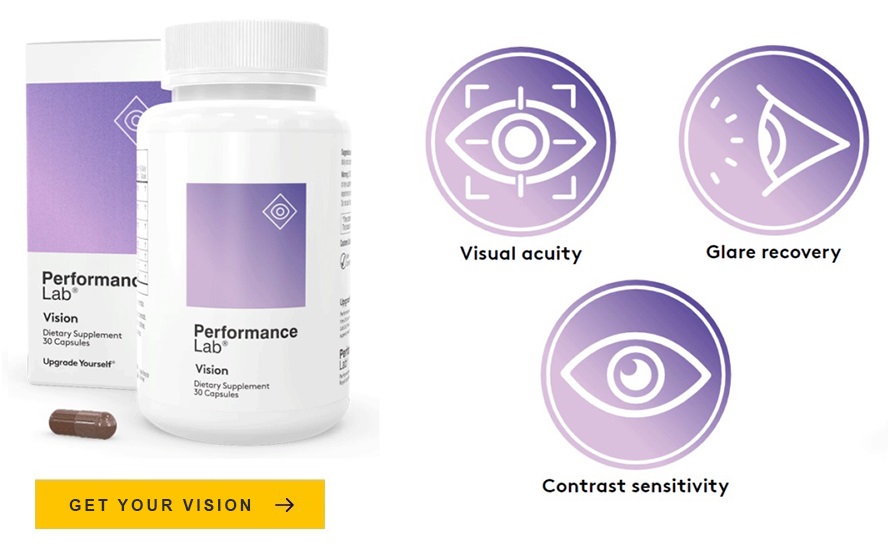
A standout example is Performance Lab Vision, which combines standardized extracts of marigold-derived lutein and zeaxanthin, microalgae astaxanthin, saffron, European bilberry, and blackcurrant alongside 300 milligrams of freeze-dried European blackcurrant fruit powder. That dual approach gives your retina exact, research-aligned doses of macular pigments while preserving the natural berry cofactors found in whole fruit – all inside a single clean vegan capsule taken with a meal.
Pairing a balanced hybrid supplement with colorful whole foods on your plate – like leafy greens, egg yolks, wild salmon, and berries – gives your eyes consistent, dependable nutrition every day without label confusion or pill fatigue.