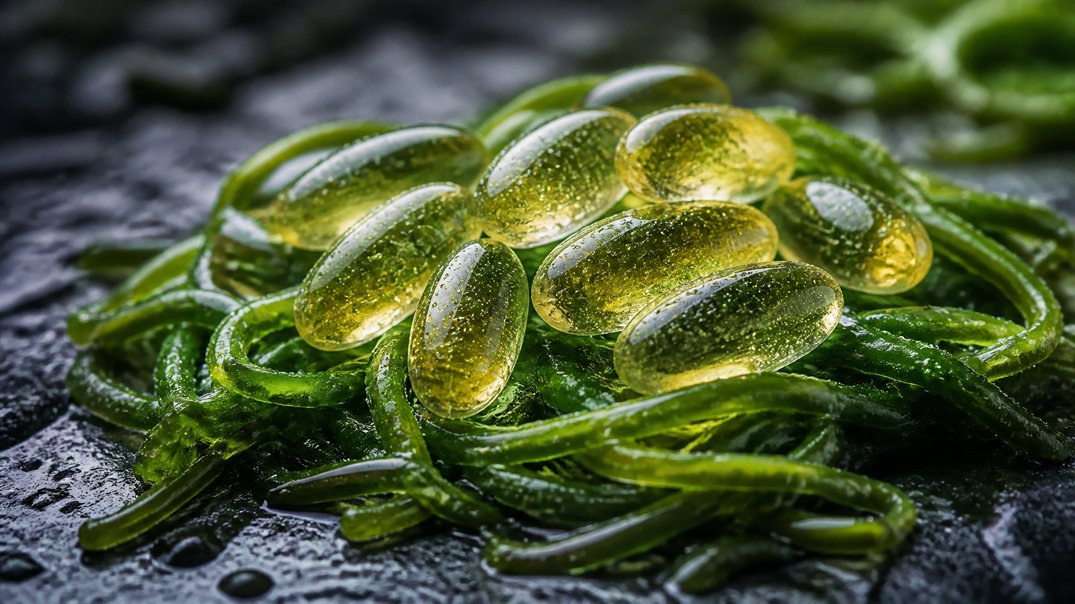
Algae-based omega-3 is made by growing microalgae in closed fermentation tanks, separating the oil from the cells, refining it, and sealing it in capsules. The process resembles brewing more than farming. Here is the journey from a single cell to the supplement in your hand.
How Microalgae Are Grown for Omega-3 Oil
There are two main ways to grow algae. Autotrophic algae use light and carbon dioxide, and can grow in open ponds or lit bioreactors. Heterotrophic algae use external sugars for energy and are usually grown in closed bioreactors.
Most commercial DHA oil comes from heterotrophic marine microorganisms, with Schizochytrium among the best known. In the tank, the cells feed on a sugar solution with added nutrients, and reputable producers use food-grade ingredients. Described processes often run in two phases: first building a dense population of cells, then encouraging them to store oil. Some batches finish in about four days.

This indoor approach brings consistency. Temperature, nutrients, and oxygen can be tightly controlled from batch to batch, and no ocean harvest is involved. That is a big part of why microbial DHA has become a common alternative to fish oil.
How the Oil Is Taken Out of the Cells
Once fermentation ends, the cells are collected and opened to release their oil. One described process dilutes the broth with water, spins it in a centrifuge, pasteurizes it, and uses food-grade enzymes to break down the cell walls. Other manufacturers use solvents such as hexane, and some newer methods are designed to avoid hexane entirely.
At this stage the product is crude oil. It contains plenty of DHA, but it also carries leftover cell material and other compounds you would not want in a supplement, which is why refining comes next. Methods vary by company, so this is one place where transparency is worth asking about.
Refining Algae Oil for Purity and Freshness
The crude oil then goes through refining. A recent review on PubMed Central lists the key steps as degumming, neutralization, decolorization, and deodorization, all aimed at improving purity and quality.
Omega-3s are delicate fats that react with oxygen and can go rancid. That is why the same review covers antioxidant technology, and why good producers protect the oil with antioxidants and limit its exposure to air.
From Refined Oil to Finished Capsule
The refined oil is standardized to hit target amounts of EPA and DHA, often blended with a natural antioxidant such as vitamin E, then sealed into softgel capsules. In vegan products the shell is plant-based rather than gelatin, so check the label. Quality brands also test the finished product for purity and potency.
You may notice that the label says “algal oil” even though the oil came from fermentation. Reviews note that these products are uniformly marketed as algal oils under regulatory and labeling conventions, so it is a naming habit, not a mystery ingredient.
What the Process Means for Your Supplement Choice
Knowing the process helps you shop smarter. Look for brands that name their algae source, publish third-party test results, and are clear about how they extract and refine their oil. As a side note, reviews cite high production costs as a challenge for microbial DHA, which helps explain why algae omega-3 often costs more than fish oil.
Algae Omega-3 Production Frequently Asked Questions
Is algae omega-3 grown in the ocean?
Usually not. Most algae-based DHA oil comes from marine microorganisms grown indoors in closed fermentation tanks, fed with sugar, with no sunlight required.
Are solvents used to make algae oil?
It depends on the manufacturer. Some processes use solvents such as hexane, while others rely on water and enzymes. Refining steps then purify the oil, and reputable brands can tell you how theirs is made.
Why does algae omega-3 often cost more than fish oil?
Growing microorganisms in controlled tanks and refining their oil is expensive. Reviews of the field cite high production costs as a main challenge.