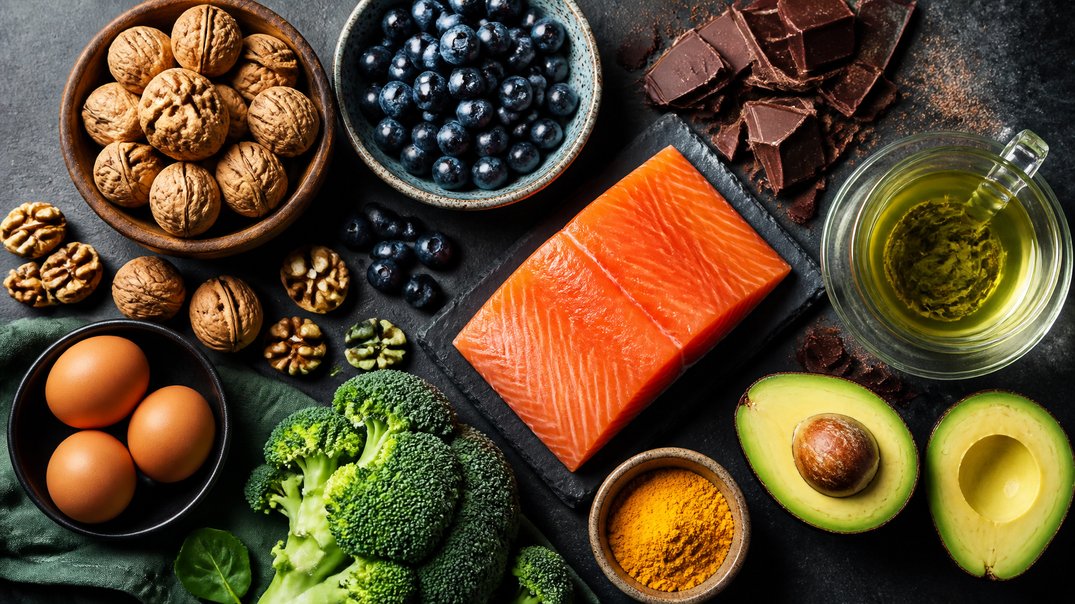
Each of these diets carries an idea about what keeps a mind healthy. The Mediterranean view stresses fish, olive oil, vegetables, and shared meals. Okinawa’s tradition stresses plants and stopping before you are full. The Nordic approach stresses local berries, whole grains, and cold-water fish. Research on all three is encouraging but still developing, and the beliefs behind them are worth understanding as much as the menus.
The Mediterranean Belief: Eat Well and Eat Together
Mediterranean food culture treats meals as a social event. Long tables, shared dishes, and generous olive oil are part of the picture, along with fish, vegetables, beans, nuts, and whole grains. One way to read this tradition is that a healthy mind is nourished by good food and good company together.
A Harvard Health commentary describes fish as the standout food in an NIH study of cognitive health and recommends eating it several times a week, while avoiding high-mercury fish such as swordfish and bigeye tuna.
The Okinawan Belief: Plants First, Stop at 80 Percent
Okinawa’s traditional approach is built on plants. As an SBS Food overview explains, purple sweet potato was a staple, vegetables made up a large share of meals, and tofu supplied much of the protein. Meat and fish were eaten in small amounts.
The guiding habit is hara hachi bu, which means eating until you are about 80 percent full. It encourages mindful eating and attention to hunger and fullness cues. The overview also notes that modern Okinawan eating has drifted toward more meat and fat, and that the island’s famous longevity has declined. A food culture is only as strong as its everyday practice.
The Nordic Belief: Local, Seasonal, and Whole
The Nordic approach draws on what grows and swims nearby: berries, rye, oats, barley, cruciferous vegetables, rapeseed oil, and fatty fish. A 2023 review in Frontiers in Nutrition says this pattern may be a sound approach for brain health, though it describes the evidence base as small.
The same review mentions a Danish school meal trial that found no effect on concentration but did find faster reading speed. Results like that are a reminder that findings are mixed and that more long-term studies are needed.

Comparing the Three Diets Side by Side
- Mediterranean: olive oil, fish, vegetables, beans, and nuts, with meals shared at a relaxed pace.
- Okinawan: purple sweet potato, vegetables, and tofu, with small portions and a stop at 80 percent full.
- Nordic: berries, rye, rapeseed oil, and fatty fish, built around local and seasonal foods.
The overlap is striking. All three put plants at the center, keep processed foods to a minimum, and treat eating as a daily practice that connects people to place and community. If you are choosing where to start, pick the tradition that matches the food you already enjoy, because a pattern you can stick with beats a perfect one you abandon in a month.
What Science Says and What It Still Needs to Show
Studies of diet and thinking are hard to run. Many rely on food questionnaires, and people who eat well often differ in other healthy ways, so researchers cannot always separate the effect of food from the effect of lifestyle. That is why you will see cautious language like “linked to” in so many studies.
It is also why the cultural angle is so interesting. These diets are not just lists of nutrients. They are ways of living, and that wider context is part of what researchers are trying to understand.
Common Questions About Culture and Brain Health Diets
Which diet is best for brain health: Mediterranean, Okinawan, or Nordic?
Research has not crowned a winner. All three emphasize plants, fish or modest protein, and minimally processed foods, and each has some supporting studies, though the evidence is still developing.
What does hara hachi bu mean?
It is an Okinawan saying that encourages eating until you are about 80 percent full, which promotes mindful eating.
Is the Nordic diet the same as the Mediterranean diet?
They share a focus on vegetables, whole grains, and fish, but the Nordic diet uses local foods such as rye, berries, and rapeseed oil in place of olive oil and Mediterranean produce.