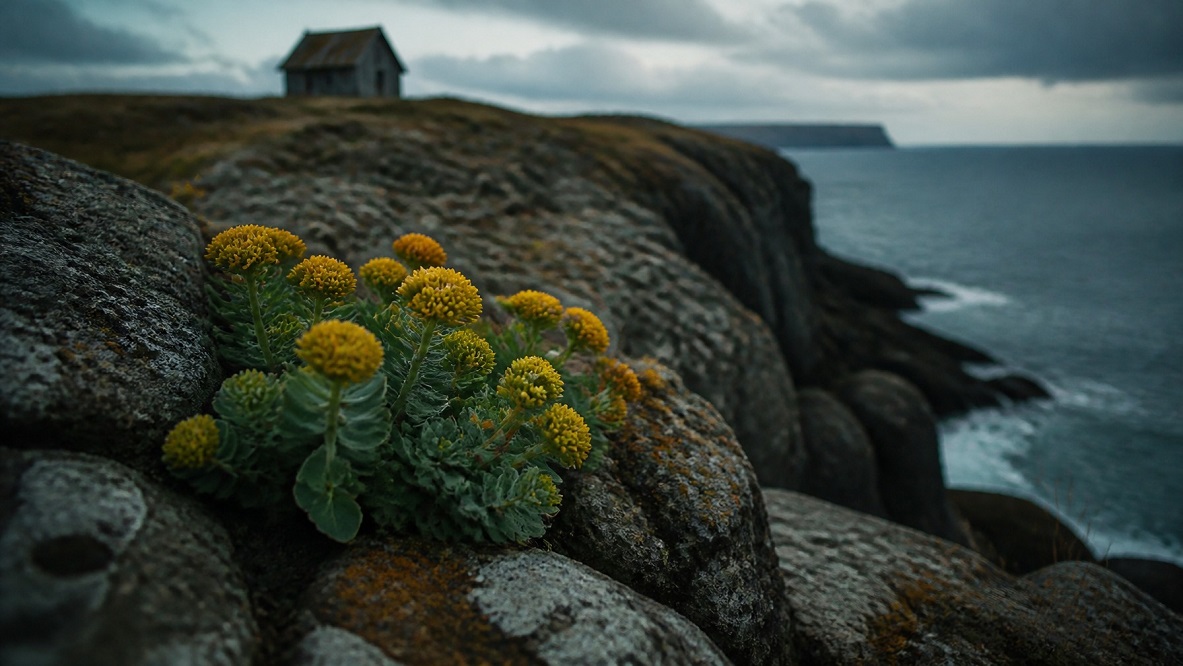
Rhodiola rosea, also called golden root or roseroot, is a tough plant that grows in cold, high places across Europe, Asia, and North America. In Russia and Scandinavia, people used it for generations to support endurance in harsh climates. Modern research has not settled whether it works, so its story is best appreciated as folk history with an open scientific question mark.
A Tough Plant From Cold Places
Rhodiola grows on rocky cliffs, tundra, and mountain slopes, where winters are long and the growing season is short. Its thick underground root is the part people use. When freshly cut, the root is said to smell faintly of roses, which explains the name roseroot. The plant grows slowly, and wild populations in some regions have faced pressure from harvesting, so responsible sourcing matters.
Plants that survive wind, frost, and thin soil tend to attract attention, and rhodiola is a good example. People living in the same harsh places noticed it and found uses for it.

Folk Use in Russia and Siberia
According to the National Center for Complementary and Integrative Health, rhodiola has a long history of use in Russia, Scandinavia, and other parts of Europe, where people used it for work performance, endurance, fatigue, and altitude sickness. Accounts of its folk use often point to Siberia and the mountains of Central Asia.
In the 20th century, Soviet researchers studied rhodiola and similar plants as adaptogens, a term for substances said to help the body cope with stress. That research helped fuel much of today’s interest in the root.
Scandinavian folk medicine also valued the root, and tales say Viking warriors used it for strength and stamina. The legend is popular in wellness circles, but solid documentation is thin, so it is safest to treat the Viking link as a good story.
What is clear is that people in cold, demanding places turned to a plant that thrived in the same conditions. There is a certain logic to it: if a plant can handle frost and thin soil, it is easy to imagine communities hoping its resilience would transfer to them.
Folk traditions rarely survive on legend alone. Plants that stay in use for generations usually come with practical knowledge, such as which part to use and how to prepare it. That practical layer, more than any Viking tale, is the real heritage.

Rhodiola Today and What Research Says
Modern marketing promotes rhodiola for energy, mood, and focus. The NCCIH says there is not enough reliable evidence to know whether it helps with any health purpose, and most human studies are of moderate quality.
Rhodiola is one of the ingredients in Mind Lab Pro, among other products on the market.
Common Questions About Rhodiola and Folk Medicine
Is rhodiola the same as golden root?
Yes. Rhodiola rosea is also called golden root, roseroot, and Arctic root, depending on the region and the seller.
Did Vikings really use rhodiola?
Stories say they did, but reliable historical documentation is hard to find. Its use in Scandinavian folk medicine is better supported.
Where does rhodiola grow?
It grows in cold regions and at high altitudes in Europe, Asia, and North America, often on rocky slopes and cliffs.