
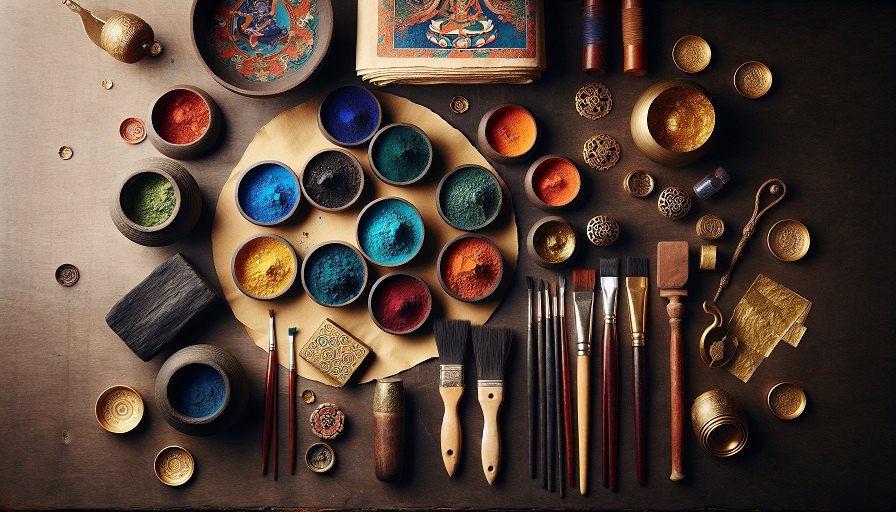
Nepal is one of those rare places where shopping stops being a transaction and becomes something closer to a cultural education. The handicraft markets of the Kathmandu Valley are not simply places to buy things. They are places where you can watch a craftsperson hammer a singing bowl, negotiate directly with the family that wove the shawl you are holding, and understand in a tangible way how a living tradition of sacred making connects to the objects placed on your altar or your bookshelf at home. Knowing where to go, and what to look for when you get there, transforms a browse into an encounter.
Contents
Kathmandu: Thamel and the Tourist Quarter
Most visitors to Nepal begin their shopping in Thamel, the dense, chaotic, wonderfully atmospheric tourist neighborhood of Kathmandu. Thamel’s narrow lanes are lined with shops selling everything from trekking gear to pashmina shawls to singing bowls to Thangka paintings, and the quality range is enormous. You will find genuine handmade objects produced by skilled Nepali artisans alongside mass-produced goods imported from China and India and marketed as Himalayan craft. The two can look surprisingly similar to an untrained eye.
A few practical principles help in Thamel. Price is not a reliable guide to quality, as markup structures vary dramatically. Ask where and by whom an object was made. Genuine artisan producers in Nepal are generally proud to answer this question in detail, and those selling imports tend to become vague. Handle objects carefully: a hand-hammered singing bowl has an irregular surface texture visible under scrutiny, while machine-made bowls have a smoother, more uniform finish. Thangka paintings produced by trained artists have fine, even brushwork with mineral pigment depth; printed reproductions lack both.
The Fixed-Price Government Emporiums
For travelers uncertain about their ability to evaluate quality or negotiate confidently, the government-run craft emporiums along New Road and near Thamel offer fixed prices and a reasonable quality floor. The selection is less exciting than what you find in independent shops, but you are unlikely to go badly wrong. These emporiums can also serve as useful calibration tools: spend an hour here before heading into the bazaar, and you will have a baseline sense of what objects should cost at their genuine handmade value.
Patan: Where the Craft Actually Lives
If Thamel is where you browse, Patan is where you buy seriously. As explored in the previous article in this series, Patan’s old city is organized around its artisan communities, and the workshops surrounding Durbar Square represent the living heart of Nepal’s metal craft tradition. Here you are often buying directly from the workshop itself, occasionally from the craftsperson who made the object in your hand.
The Patan Museum, housed in a beautifully restored seventeenth-century palace at the northern edge of Durbar Square, is worth visiting before any serious shopping in the area. Its collection of Newar bronze and gilt copper statues provides an invaluable education in what genuinely fine craftsmanship looks like, giving your eyes reference points that the best shops in the surrounding lanes will reward you for having.
The Golden Street and Workshop Lanes
The lanes radiating from Patan’s Durbar Square, particularly the area known informally as Golden Street for its concentration of metal shops, contain workshops ranging from small family operations producing traditional religious objects to larger studios with global export relationships. Both are worth visiting. The family workshops often have pieces in progress that you can observe, giving you the rare opportunity to see exactly what a half-finished singing bowl or a wax model awaiting casting looks like. That transparency about process is itself a form of quality guarantee.
Bhaktapur: Pottery, Wood, and Weaving
The third of the Kathmandu Valley’s great historic cities, Bhaktapur, specializes in craft traditions that complement rather than duplicate Patan’s metalwork focus. Bhaktapur’s Pottery Square is one of the most visually striking craft environments in Nepal: a large open courtyard where potters work at traditional foot-powered wheels and hundreds of pots, vases, and religious vessels dry in the sun on straw mats. The terracotta work produced here, including traditional vessels, decorative items, and the distinctive peacock-motif pottery of Bhaktapur, is available directly from the potters in a setting unchanged in its essentials for centuries.
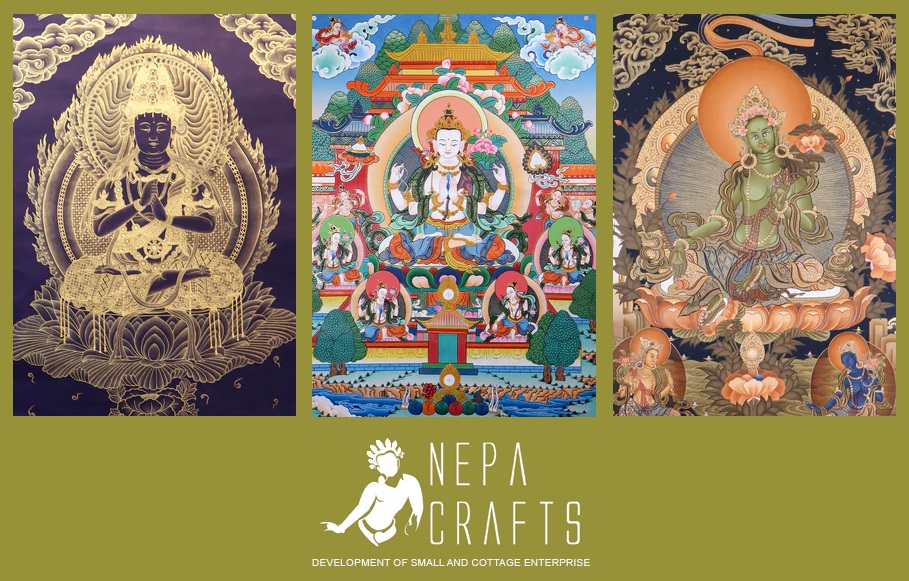
Bhaktapur is also the center of Nepal’s Thangka painting schools, where serious students study for years under master painters before producing work for sale. Several studios near Taumadhi Square welcome visitors to observe the painting process, which provides the kind of direct encounter with craft in progress that no shop display can substitute for.
Swayambhunath and Boudhanath: Sacred Markets
The stupa complexes of Swayambhunath, the famous Monkey Temple on a hilltop west of Kathmandu, and Boudhanath, the great white stupa that is the center of Tibetan Buddhist life in Nepal, both have informal markets selling religious objects, prayer flags, singing bowls, malas, and incense. These markets have a different character from the commercial bazaars of Thamel: the buyers include Tibetan Buddhist pilgrims and practitioners as well as tourists, which tends to keep the quality of genuinely religious objects more honest. A mala or a prayer wheel bought at Boudhanath from a Tibetan vendor has likely been evaluated by buyers who will actually use it, which is not always the case in Thamel.
Practical Advice for Buying Well
Bargaining is expected in most market contexts in Nepal, but approach it with respect rather than aggression. The margins in genuine artisan goods are not enormous, and a craftsperson who has spent two months making a statue deserves a price that reflects that labor. A reasonable negotiation of ten to twenty percent is generally appropriate. Insisting on half price for a handmade object is not a triumph of savvy shopping. It is a failure to value what you are holding.
Take time. The best purchases in Nepal’s handicraft markets tend to come from sitting with an object for a moment, asking questions about its making, and letting genuine connection rather than impulse guide the decision. An object chosen that way arrives home carrying more than its physical self. It carries the encounter that found it, which, in a market culture as rich and human as Nepal’s, is part of what makes it worth having.