

There is a particular kind of sound that seems to reach the nervous system by a different route than most music. Not through the intellect, not through emotional association, not through the complex apparatus of taste and preference that ordinary listening involves, but more directly, more physically, arriving somewhere in the chest and the belly before it has quite finished reaching the ears. If you have ever been in a room where someone was playing a Himalayan singing bowl or a tongue drum well, you likely know exactly what this description is pointing at. The sound does something to you before you have decided how you feel about it.
Both singing bowls and tongue drums occupy this particular acoustic territory, the zone of instruments that seem less like entertainment and more like medicine, less like performance and more like invitation. They have found devoted followings in meditation communities, sound healing practices, yoga studios, music therapy programs, and the living rooms of people who simply discovered that playing one for twenty minutes at the end of a difficult day works better than most other available options. Yet for all they share in terms of effect and context, these two instruments are remarkably different in their origins, construction, sound profile, and the specific qualities of experience they offer. Understanding both, and understanding how they compare, helps anyone drawn to meditative percussion find the instrument that best fits their particular need.
Contents
The Singing Bowl: Ancient Resonance
We have covered the origins and healing science of Himalayan singing bowls in detail in earlier articles in this series, so here a summary will serve. Singing bowls are hand-hammered or cast metal bowls, traditionally made from bronze alloys in Nepal and Tibet, that produce sustained multi-harmonic tones when struck or when a mallet is circled around their rim. Their sound profile is characterized by complexity and depth: a single bowl, properly played, will produce a fundamental tone accompanied by multiple overtones that evolve and interact as the sound develops, creating an acoustic environment that feels alive and three-dimensional rather than flat and finite.
The Rim Technique
The defining playing technique of the singing bowl, the one that most distinguishes it from any other instrument, is the continuous rimming method. A wooden, leather-wrapped, or felt-tipped mallet is pressed lightly against the outside of the bowl’s rim and moved in a slow, steady circle, maintaining even pressure and consistent speed. This friction causes the bowl to enter sustained resonance, producing a continuous, evolving tone that can be maintained as long as the mallet keeps moving. The technique takes some practice to learn well. Most beginners find that the bowl either falls silent, because the pressure is too light or the speed too slow, or produces an unpleasant scraping sound, because the pressure is too heavy or the speed too fast. The sweet spot, where the bowl sings freely and fully, is a physical skill that develops with patient repetition and that, once found, produces a satisfaction somewhat disproportionate to the apparent simplicity of the task.
What the Sound Does
A well-played singing bowl fills a room in a way that most instruments do not. Because its overtone profile extends across a wide frequency range, the sound seems to come from everywhere rather than from a single point source. People sitting in the presence of a large singing bowl being played skillfully often report feeling the sound as much as hearing it, particularly in the chest, the throat, and the top of the head. These are not imagined sensations. The bowl is producing physical vibration in the air that the body responds to as a whole organism, not just through the ears. This whole-body acoustic experience is one of the primary reasons singing bowls are used in sound healing sessions, where the aim is to address the nervous system and the body directly rather than simply providing pleasant listening material.
The Tongue Drum: A Newer Instrument With Ancient Cousins
The tongue drum is a considerably more recent invention than the singing bowl, at least in its current steel form, though it belongs to a family of instruments with a much longer history. The modern steel tongue drum was developed in the early twenty-first century, with various instrument makers experimenting with cut steel surfaces to produce melodic percussion instruments accessible to players without formal musical training. Its most direct ancestor is the Caribbean steel pan, and its more distant relatives include the mbira or thumb piano of sub-Saharan Africa and the wooden slit drums found across cultures from West Africa to Oceania to pre-Columbian Mesoamerica.
Construction and Design
A tongue drum is typically made from a hollow steel shell, either a repurposed propane tank in early DIY versions or purpose-built steel forms in modern commercial instruments, into which a series of tongue-shaped cuts have been made with a plasma cutter or precision saw. Each tongue, a strip of steel still attached at one end and free to vibrate at the other, produces a specific pitch when struck. The length, width, and thickness of each tongue determines its note, and manufacturers tune their instruments carefully during fabrication. Most tongue drums are pentatonic, meaning they use a five-note scale that is virtually impossible to play a dissonant combination with, which is part of their particular appeal for non-musicians: you can strike any combination of tongues in any order and the result will be harmonically pleasing. This is a feature, not an accident.
The Sound of a Tongue Drum
Where a singing bowl’s sound is sustained, enveloping, and harmonically dense, a tongue drum’s sound is bright, clear, and percussive. Each note rings cleanly when struck and decays within a few seconds, leaving a silence that itself becomes part of the musical experience. The tone is warm rather than metallic despite the steel construction, often described as similar to a marimba or xylophone but rounder and more intimate. Playing a tongue drum feels more explicitly musical than playing a singing bowl. You are making melodies, even if those melodies are simple and improvised. The instrument invites a kind of playful exploration that the singing bowl, with its more ceremonial and meditative associations, does not always call forth.
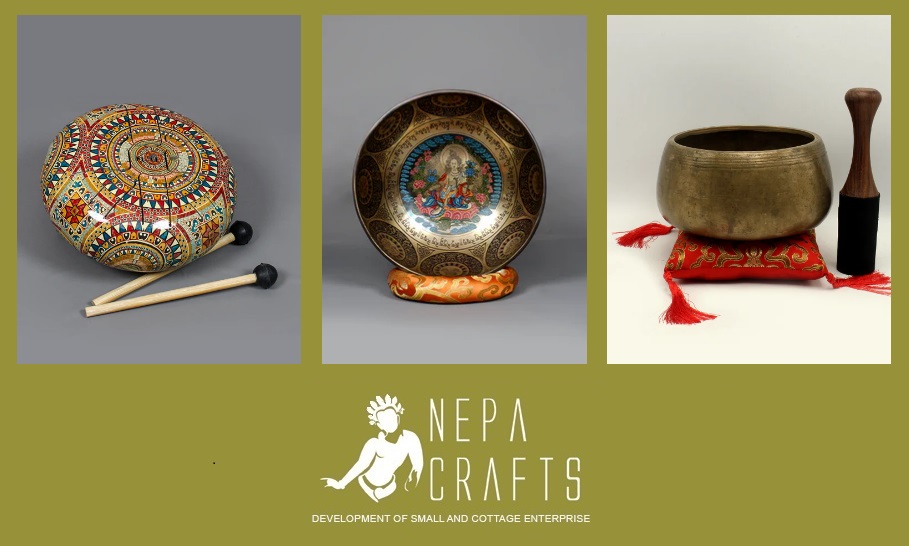
Side by Side: Key Differences
Placing these two instruments in direct comparison reveals a set of complementary contrasts that help clarify what each does best and what kind of practitioner or player each is most likely to suit.
Sustained Versus Percussive Sound
The most fundamental acoustic difference is the distinction between sustained resonance and percussive decay. A singing bowl, once set into continuous resonance by the rimming technique, produces an unbroken sound environment. There are no beats, no rhythmic articulation, no silence between notes. The experience is more like being inside a sound than listening to one. A tongue drum, by contrast, is inherently rhythmic and melodic. Its notes have clear beginnings and endings. The silence between strikes is as much a part of the music as the notes themselves. This makes tongue drums more musically intuitive for most people and more suited to conscious rhythmic improvisation, while singing bowls are more suited to immersive, non-rhythmic sound environments aimed at deep relaxation or meditation.
Learning Curve
Both instruments are accessible to beginners, but in different ways. A tongue drum is perhaps the most immediately rewarding instrument most people will ever pick up. Strike a tongue, hear a note. Strike another, hear another note. The pentatonic tuning ensures everything sounds good together. Within minutes of first contact, a complete non-musician can produce something that sounds genuinely musical. The singing bowl is more demanding in its fundamental technique. The rimming method requires developing a feel for pressure, speed, and consistency that takes time to acquire. A beginner with a singing bowl often produces inconsistent results in the first few sessions. The payoff, when the technique is found, is considerable, but it requires patience that the tongue drum does not demand in the same way.
Meditative Versus Musical Orientation
Singing bowls come with a deep contemplative heritage. Their primary association, in both their culture of origin and their current use, is with meditation, healing, and sacred ceremony. Playing one carries that context with it, even in a secular setting. Tongue drums are more culturally neutral. They are new enough that no single tradition owns them, and their design explicitly invites musical play rather than ritual use. This makes them slightly more accessible to people who feel uncertain about the spiritual dimensions of singing bowl practice, and slightly less intimidating as a first entry point into meditative percussion.
Using Them Together
The most experienced sound healers and meditation musicians have discovered what becomes obvious once you have spent time with both instruments: they are not competitors. They are collaborators. A sound session that begins with the immersive, entraining resonance of a large singing bowl to settle the room and shift the nervous system into a receptive state, and then introduces the gentle melodic invitation of a tongue drum to guide the listener’s attention through that settled space, offers something neither instrument could provide alone. The bowl creates the environment. The tongue drum populates it with something that feels like breath or heartbeat, a living pulse within the stillness.
The Nepali craftspeople who produce both instruments understand them as belonging to the same family of sacred sonic objects, objects whose value is measured not in concert-hall terms but in the quality of presence and stillness they can generate in the space where they are played. Whether that space is a monastery, a sound healing studio, a yoga class, or a quiet corner of your own home on a Tuesday evening when the day has been longer than you bargained for, the invitation from both instruments is essentially the same: stop, listen, feel the vibration move through you, and discover what is present on the other side of the noise.