

If you have ever held a piece of Lokta paper, you already know that it feels different from ordinary paper. It has a texture that is simultaneously rough and silky, a translucent quality when held to the light, and a particular combination of delicacy and toughness that seems almost contradictory until you learn where it comes from. Lokta paper is handmade from the bark of the Lokta shrub, a plant that grows wild in the Himalayan forests of Nepal at elevations between 6,000 and 11,000 feet. It has been made in Nepal for at least a thousand years, possibly considerably longer, and the technique used today by Nepali artisans is essentially the same one that produced the manuscripts, sacred texts, and government documents of medieval Nepal.
That continuity of craft across a millennium is remarkable by any measure. The fact that Lokta paper is simultaneously an ancient tradition and a growing presence in contemporary global markets makes it one of the more interesting stories in Himalayan craft culture.
Contents
The Lokta Plant and Why It Makes Exceptional Paper
The Lokta shrub, botanically known as Daphne bholua or Daphne papyracea, is a flowering plant with long, fibrous inner bark that makes it unusually well suited for papermaking. The fibers in Lokta bark are long, strong, and naturally resistant to insects, mold, and humidity, which explains why documents written on Lokta paper centuries ago have survived in conditions that would have destroyed ordinary wood-pulp paper long ago. Many of the oldest Nepali manuscripts still legible today are written on Lokta paper, and the Buddhist monasteries of the Kathmandu Valley and the highland regions have long relied on it for sacred texts precisely because of its extraordinary durability.
Unlike most commercial papermaking, which requires felling trees, Lokta harvesting is sustainable by nature. The bark is stripped from the lower portions of the shrub, which then regenerates within five to seven years. The plant itself is not killed. This cycle of harvest and regrowth, practiced by Nepali communities for generations before the word sustainability entered the global vocabulary, makes Lokta paper one of the most genuinely eco-friendly paper products available anywhere.
How Lokta Paper Is Made
The papermaking process has remained largely unchanged for centuries, and watching it is an experience in the patient, physical intelligence of traditional craft.
Harvested bark is first boiled in large vats of water mixed with wood ash or soda ash, which breaks down the fibrous material into a soft, workable pulp. The pulp is then beaten and washed repeatedly to remove impurities, producing a clean, white or cream-colored slurry. This slurry is poured onto wooden frames covered with fine mesh screens, which are then submerged in water, allowing the fibers to settle evenly across the screen surface. The frames are lifted and placed in sunlight to dry, a process that takes several hours in good conditions.
When peeled from the screen, the result is a sheet of Lokta paper whose texture preserves the memory of the mesh beneath it and whose edges are naturally deckled rather than cut, giving each sheet an organic irregularity that machine-made paper can never replicate. The sheets can be left in their natural cream or white tones or dyed with natural pigments derived from plants and minerals, producing the vivid, warm-toned papers that have become associated with Nepali craft products worldwide.
Lokta Paper in Traditional Use
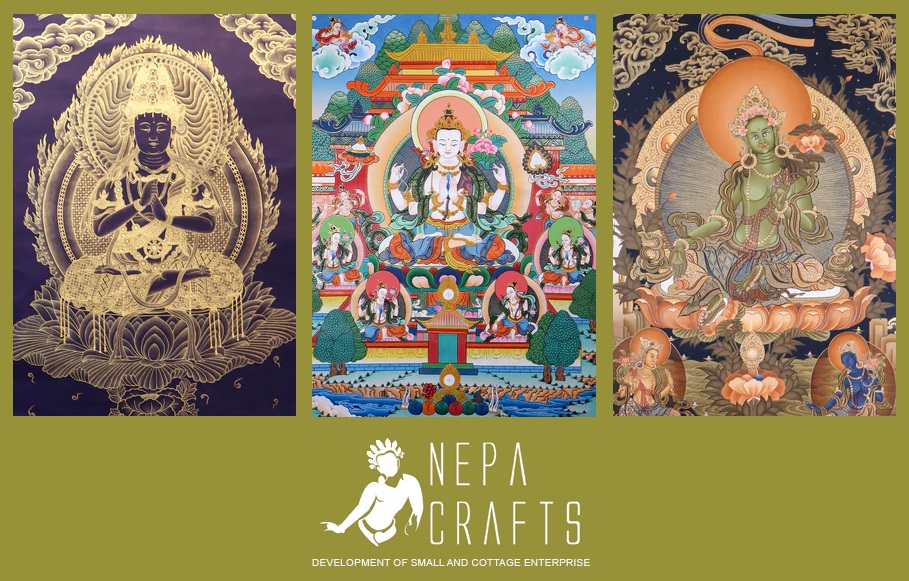
For most of its history, Lokta paper was the paper of Nepal’s official and sacred life. Royal decrees, legal documents, and land records were written on it because its durability meant they could be trusted to survive. The monasteries of Tibetan Buddhism and the Newar Buddhist tradition of the Kathmandu Valley used it for sacred texts, prayer books, and the backing material for Thangka paintings. Some of the earliest known Nepali manuscripts, written in Sanskrit and Newari, survive today only because Lokta paper proved more durable than the content it carried.
It was also used for wrapping valuable objects and trading goods, for covering book boards, and for lining the interiors of wooden chests and cabinets, where its insect-repelling properties made it a natural preservative for whatever was stored within.
Lokta Paper in the Modern World
The global handmade paper and artisan stationery market discovered Lokta paper in the latter decades of the twentieth century, and the timing could not have been better for the communities of Nepali women who produce most of it. Lokta papermaking has become a significant source of income in rural mountain communities, particularly for women’s cooperatives that were established with support from development organizations in the 1980s and 1990s. The craft is well suited to home-based production, requires no expensive machinery, uses sustainably harvested local materials, and produces a product for which global demand has grown steadily.
Contemporary uses of Lokta paper span a wide range. It is used for handmade journals, notebooks, and sketchbooks that appeal to artists, writers, and travelers who want something with more character than a mass-produced notebook. It is used for greeting cards, gift wrap, and decorative paper products that carry the texture and warmth of handmade craft. Book artists and bookbinders prize it for its strength and flexibility. Printmakers use it for both relief printing and screen printing, where its absorbent surface accepts ink beautifully. Interior designers use large sheets as decorative wall coverings and lampshade material, where its translucency creates a warm glow when backlit.
There is also a growing use of Lokta paper in the production of accessories and fashion items: small bags, wallets, notebooks with leather covers, and jewelry holders. The paper’s surprising strength makes it workable in ways that ordinary paper is not, and its natural texture gives finished objects an earthy elegance that synthetic materials cannot reproduce.
Why Lokta Paper Matters Beyond the Product
Every sheet of Lokta paper sold in a bookshop in London, a stationery store in New York, or an online artisan marketplace is connected to a chain of people and places that most buyers never see: the women who harvest bark in Himalayan forests, the families who boil and beat pulp in mountain villages, the cooperatives that have organized and sustained the tradition, and the centuries of Nepali cultural life that found in this remarkable plant a material durable enough to carry its most important words.
Buying Lokta paper is one of those rare instances where the consumer choice and the cultural and ecological good align cleanly. The paper is genuinely beautiful, genuinely functional, and genuinely rooted in a living tradition that deserves the global appreciation it is slowly but steadily receiving. Nepal has given the world a great many remarkable things. A piece of paper that lasts a thousand years and grows back after you harvest it is not a bad addition to the list.