

Most introductions to the gut microbiome start with numbers: trillions of microorganisms, hundreds of species, more bacterial cells than human cells in the body. The numbers are impressive, but they can make it difficult to understand why any single bacterium would deserve special attention. Akkermansia muciniphila deserves it anyway. Not because it is the most abundant resident of the gut, it isn’t, but because of where it lives, what it does there, and the chain of metabolic consequences that follow from its presence or absence. Among the cast of characters in the gut microbiome with meaningful implications for human health, Akkermansia has one of the most compelling stories to tell.
That story connects a mucus-dwelling bacterium discovered in a Dutch laboratory in 2004 to one of the most consequential hormones in metabolic medicine, through a series of biological mechanisms that reward the effort of understanding them. Whether you are encountering Akkermansia for the first time or looking to fill in gaps in what you already know, what follows is the most useful account of it available outside of a scientific journal.
Contents
Who Akkermansia Is: A Portrait of an Unusual Bacterium
Akkermansia muciniphila belongs to the phylum Verrucomicrobia, a bacterial lineage that is relatively rare in the gut but disproportionately important to its function. The species was first isolated and described by Muriel Derrien and colleagues at Wageningen University in the Netherlands, named after the Dutch microbiologist Antoon Akkermans in recognition of his contributions to gut microbiology research. “Muciniphila” reflects the organism’s defining dietary preference: mucin, the glycoprotein backbone of the intestinal mucus layer.
That preference is not incidental. It places Akkermansia in a specific ecological niche that no other commercially supplemented probiotic bacterium occupies, the zone between the gut’s luminal contents and the epithelial cells that line the intestinal wall. This address in the gut’s most biologically active border region is the foundation of everything distinctive about Akkermansia’s effects on human health.
Life in the Mucus Layer
The intestinal mucus layer is a dynamic, constantly renewed structure secreted by goblet cells embedded in the gut epithelium. It serves as the first line of physical and immunological defense for the intestinal lining, trapping bacteria, pathogens, and particles before they can contact the epithelial surface directly. It also harbors the enteroendocrine cells that produce GLP-1 and other metabolic hormones, making it not just a barrier but an active endocrine environment.
Akkermansia feeds on mucin by secreting enzymes that degrade its glycan chains, releasing sugars it uses for energy. In doing so, it signals the goblet cells beneath it to produce more mucin, creating a continuous renewal cycle that thickens and strengthens the layer rather than depleting it. This is what makes Akkermansia a mutualistic rather than simply parasitic inhabitant: it consumes a resource that its consumption stimulates the host to replenish at a higher rate, leaving the structure it inhabits in better condition than it would otherwise maintain.
How Akkermansia Fits into the Broader Microbiome
Akkermansia does not operate in isolation from the rest of the gut microbial community. Its fermentation of mucin produces acetate and other short-chain fatty acid precursors that feed neighboring bacteria, creating cross-feeding relationships that support a more diverse and metabolically active microbial ecosystem. Research has found that Akkermansia abundance correlates positively with overall gut microbiome diversity, suggesting it functions as something of a keystone species whose presence supports the conditions in which other beneficial bacteria can thrive. Its absence, conversely, is associated not just with the loss of its own contributions but with a broader microbiome dysbiosis that amplifies the metabolic consequences of its depletion.
The GLP-1 Connection: How Akkermansia Influences Hormone Secretion
The link between Akkermansia and GLP-1 has been established through converging lines of evidence that span cell biology, animal experiments, and human clinical research. Understanding it requires following the biology from the bacterium’s position in the mucus layer to the hormonal signals that reach the pancreas and brain.
Maintaining the Environment Where GLP-1 Is Made
GLP-1 is produced by L-cells, enteroendocrine cells embedded in the intestinal epithelium that are exposed on their luminal side to the contents of the gut and connected on their basolateral side to the bloodstream and enteric nervous system. These cells release GLP-1 when specific nutrient signals and chemical stimuli activate them, and they do this most effectively in a low-inflammatory, structurally intact epithelial environment.
Akkermansia maintains precisely that environment. By keeping the mucus layer robust, it prevents the bacterial lipopolysaccharides and other inflammatory compounds that accumulate in a compromised gut barrier from reaching the epithelial surface. The L-cells, operating in a cleaner chemical neighborhood, retain their full secretory responsiveness to food-derived stimuli. Studies comparing GLP-1 output in animals with healthy Akkermansia populations to those with depleted or absent Akkermansia consistently show higher postprandial GLP-1 in the former group, even when dietary inputs are held constant. The bacterium’s effect on L-cell function is structural as much as chemical, which is part of what makes it different in kind from other microbiome-based GLP-1 support strategies.
Short-Chain Fatty Acids as Direct Hormonal Triggers
Beyond the structural contribution, Akkermansia contributes to the chemical signals that stimulate GLP-1 secretion directly. Its production of acetate through mucin fermentation, and its support for the broader SCFA-producing microbial community through cross-feeding, creates a colonic environment rich in propionate and butyrate. These short-chain fatty acids bind to free fatty acid receptors on L-cell surfaces, free fatty acid receptor 2 and free fatty acid receptor 3 specifically, and trigger GLP-1 release in a dose-dependent manner. This pathway explains in part why increasing both Akkermansia abundance and dietary fiber consumption simultaneously produces more pronounced GLP-1 support than either intervention alone: the bacterium creates the structural environment while the fiber feeds the microbes that generate the chemical triggers.
The Amuc_1100 Protein: A Molecular Bridge
Among the mechanisms connecting Akkermansia to GLP-1 and metabolic health, Amuc_1100 deserves particular attention because it is the most molecularly specific and arguably the most scientifically surprising. Amuc_1100 is a protein embedded in Akkermansia’s outer membrane that interacts with toll-like receptor 2 on intestinal epithelial cells. This interaction improves gut barrier tight junction function, reduces inflammatory signaling within the epithelium, and influences the secretory behavior of enteroendocrine cells in ways that the research community is still fully characterizing.
What made Amuc_1100 famous in metabolic research circles was the finding that pasteurized Akkermansia, in which the bacteria are heat-killed but the outer membrane proteins remain intact, produced metabolic benefits in human subjects comparable to live bacteria. This was not what researchers expected. It suggested that Akkermansia’s most important contributions to metabolic health were not dependent on the bacteria being alive and metabolically active in the gut, but on specific structural components that survived processing. That finding opened both a commercial pathway for shelf-stable pasteurized supplements and a pharmaceutical research pathway for Amuc_1100 as an isolated therapeutic agent.
What Depletion Looks Like and Who It Affects
Akkermansia is not uniformly present at optimal levels in the human population. The same metabolic and lifestyle factors that characterize modern life in industrialized societies are precisely the ones that suppress Akkermansia abundance, creating a mismatch between the gut environment humans evolved with and the one most people currently carry.
Extensive research across diverse populations has established that people with obesity, type 2 diabetes, metabolic syndrome, non-alcoholic fatty liver disease, and cardiovascular risk factors consistently carry lower Akkermansia levels than their metabolically healthy counterparts. In some cohorts of people with severe obesity, Akkermansia is essentially undetectable. High consumption of ultra-processed foods, dietary emulsifiers that physically disrupt the mucus layer, low fiber intake, repeated antibiotic exposure, chronic psychological stress, and physical inactivity all independently suppress Akkermansia populations. The result is that a significant proportion of the adults most in need of better GLP-1 support and metabolic regulation are also the people most likely to be carrying a depleted Akkermansia population, creating a biological deficit that compounds the metabolic challenges they are already managing.
Getting to Know Akkermansia Through Supplementation and Diet
The practical question that follows from understanding who Akkermansia is and what it does is how to support it. The research points toward two complementary pathways that work best when pursued together rather than in isolation.
Pasteurized Supplementation
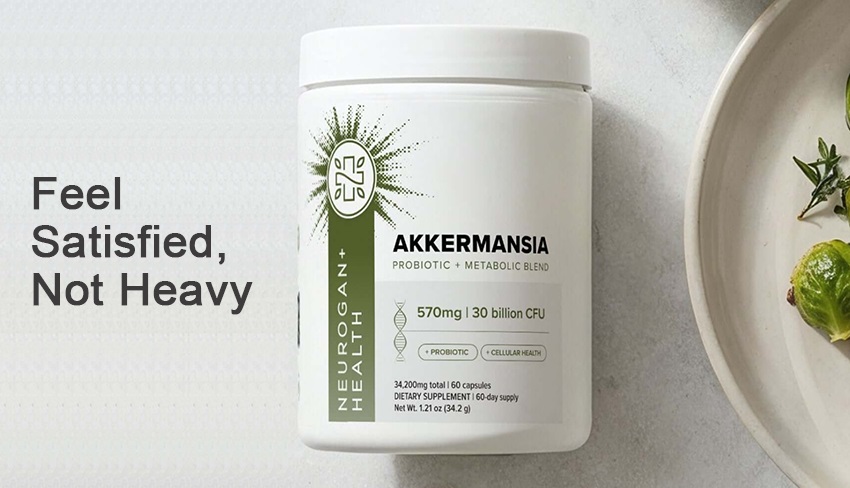
Pasteurized Akkermansia muciniphila supplements deliver standardized doses of heat-treated bacteria that retain the outer membrane proteins responsible for the most clinically documented metabolic effects. The 2019 Nature Medicine trial used ten billion bacterial equivalents daily for three months as its therapeutic dose, and commercial products have generally followed that parameter. Quality varies between manufacturers, and looking for third-party testing certification and explicit labeling of bacterial equivalent counts rather than just colony-forming units, a measurement less relevant for pasteurized preparations, helps identify more reliable products. Consistency over a minimum of eight to twelve weeks is necessary to evaluate meaningful effects on metabolic markers.
Dietary Support for Akkermansia Abundance
For people with moderate rather than severe depletion, dietary strategies can meaningfully support Akkermansia abundance alongside or instead of direct supplementation. Pomegranate extract and whole pomegranate consumption have the strongest human evidence for Akkermansia promotion among polyphenol sources, with cranberry, green tea, and grape seed extract also showing consistent effects. Prebiotic fibers including chicory inulin, fructooligosaccharides from garlic and leeks, and arabinoxylan from whole grains support the broader microbial ecosystem Akkermansia depends on. Reducing dietary emulsifiers by minimizing ultra-processed food consumption removes a specific threat to the mucus layer architecture Akkermansia inhabits. Regular aerobic exercise rounds out the lifestyle picture, with multiple studies documenting independent positive effects on Akkermansia abundance in physically active compared to sedentary individuals.
Frequently Asked Questions
Is Akkermansia a Probiotic in the Traditional Sense?
Akkermansia fits the broad definition of a probiotic as a live microorganism that, when administered in adequate amounts, confers a health benefit on the host. However, it is functionally distinct from the Lactobacillus and Bifidobacterium strains that dominate the conventional probiotic category in its habitat, mechanisms, and the specific health outcomes it influences. Many researchers prefer terms like “next-generation probiotic” or “precision probiotic” to distinguish it from traditional strains and set appropriate expectations about the type of benefit it provides.
Can You Get Enough Akkermansia from Fermented Foods?
Conventional fermented foods like yogurt, kefir, kimchi, and sauerkraut do not contain Akkermansia. These foods are primarily vehicles for Lactobacillus and Bifidobacterium strains, which thrive in oxygen-containing fermentation environments that Akkermansia cannot survive in. Akkermansia is a strictly anaerobic mucus-layer specialist that cannot be cultured or delivered through traditional fermented food production. Dietary support for Akkermansia works through providing the polyphenols and prebiotic substrates that promote its growth from within the gut rather than introducing it from external food sources.
How Does Akkermansia’s GLP-1 Support Complement a Healthy Diet?
A diet rich in fiber and polyphenols promotes Akkermansia growth while simultaneously providing the prebiotic substrate and SCFA precursors that amplify GLP-1 secretion through L-cell stimulation. Akkermansia’s structural contribution to L-cell function means that even the GLP-1-stimulating effects of dietary fiber are expressed more fully in a gut with healthy Akkermansia populations than in one without them. The two interventions are genuinely synergistic: diet provides the raw material and Akkermansia maintains the biological architecture through which that material is converted into hormonal signals.
What Happens to Akkermansia During Illness or Antibiotic Treatment?
Akkermansia is sensitive to broad-spectrum antibiotics, particularly those active against gram-negative bacteria, and populations can decline substantially during a course of treatment. Post-antibiotic recovery without targeted support can take three to six months, during which the gut barrier and GLP-1 production system operate at reduced efficiency. Supporting Akkermansia through polyphenol-rich foods and prebiotic fiber during and after antibiotic treatment, and considering direct supplementation for faster restoration, is a biologically logical response to this predictable disruption.