
The word “complementary” is used loosely in the supplement industry, often meaning little more than “both of these are good for you.” In the case of berberine and Akkermansia muciniphila, the word earns its place in the description because it is literally true in the biological sense: the pathways through which each influences GLP-1 production and activity are distinct enough that they do not duplicate each other, and similar enough in their shared goal that they point in the same metabolic direction. That specific combination of non-overlap and shared purpose is what makes a truly complementary relationship, and it is worth understanding in some depth because the depth is where the practical value actually lives.
Contents
Berberine’s GLP-1 Pathways: Chemical Precision at Multiple Points
Berberine is a small alkaloid molecule with a remarkably wide range of molecular targets, and several of them intersect with the GLP-1 system in ways that are mechanistically distinct from each other as well as from Akkermansia’s contributions. Understanding berberine’s GLP-1 support means following at least three separate molecular threads that converge on the same hormonal outcome through different entry points.
Pathway One: Direct L-Cell Receptor Activation
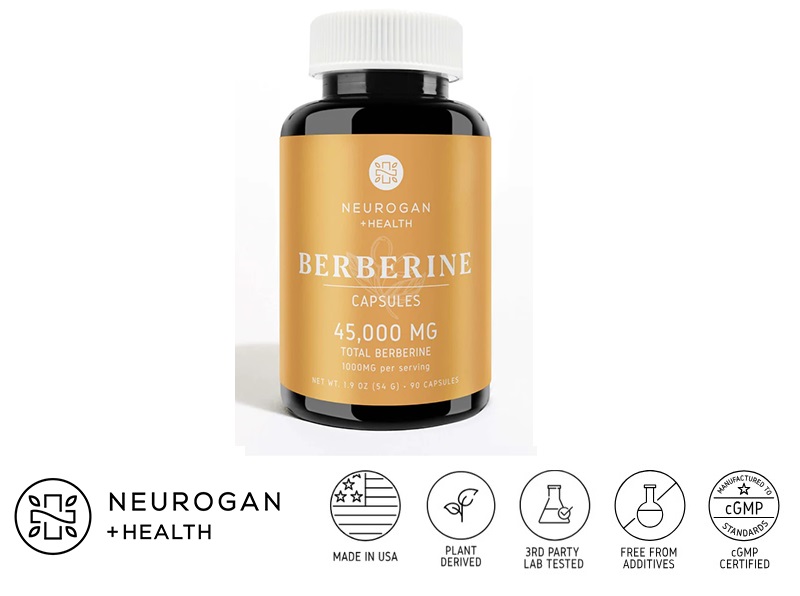
The most immediate of berberine’s GLP-1 pathways involves its direct interaction with receptors on the surface of intestinal L-cells. These enteroendocrine cells express bitter taste receptors, bile acid receptors, and free fatty acid receptors whose activation triggers intracellular signaling cascades that culminate in GLP-1 secretion. Berberine activates several of these receptor classes, functioning as a multi-target L-cell stimulant rather than a single receptor agonist. Research using NCI-H716 cells, a well-characterized human intestinal L-cell model, has demonstrated concentration-dependent GLP-1 release in response to berberine exposure, with the response following the kind of dose-response curve that indicates genuine receptor-mediated secretion rather than nonspecific cellular stress. In vivo human studies have confirmed that postprandial GLP-1 concentrations are meaningfully higher in berberine-treated subjects than in placebo controls, validating that the cell-level receptor activation translates to a measurable whole-organism hormonal response.
Pathway Two: DPP-4 Enzyme Inhibition
GLP-1’s active lifespan after secretion is measured in minutes under normal physiological conditions. The enzyme dipeptidyl peptidase-4 cleaves the hormone at the N-terminal alanine residue, inactivating it before it can fully exert its effects on insulin secretion, gastric motility, and hypothalamic satiety circuits. Berberine inhibits DPP-4 activity in a manner documented in both animal and human research, reducing the rate of GLP-1 degradation and extending the window during which secreted hormone remains active. The clinical significance is additive to the direct L-cell stimulation pathway: more GLP-1 is produced and more of what is produced survives long enough to reach its target receptors. Together, pathway one and pathway two create a coordinated increase in functional GLP-1 availability that neither mechanism alone would achieve.
Pathway Three: AMPK Activation and Parallel Metabolic Support
Berberine’s activation of AMP-activated protein kinase operates largely independently of the GLP-1 axis while supporting the same downstream metabolic outcomes. AMPK activation in liver cells reduces hepatic glucose production, addressing one of the primary drivers of elevated fasting blood sugar that GLP-1’s insulin-stimulating effects work against postprandially. AMPK activation in muscle and fat tissue improves insulin sensitivity in ways that make GLP-1’s glucose-dependent insulin release more effective at clearing postprandial glucose. This pathway does not increase GLP-1 levels or extend its active window. Instead it improves the metabolic terrain in which GLP-1 operates, reducing the systemic resistance that otherwise blunts the hormone’s effects even when secretion is adequate. In the context of the combination protocol, AMPK activation is berberine’s contribution that most directly addresses the insulin resistance dimension of metabolic dysfunction, a dimension that Akkermansia does not engage through any equivalent pathway.
Akkermansia’s GLP-1 Pathways: Structural Architecture and Ecological Foundations
Where berberine’s pathways are primarily chemical and enzymatic, operating on receptors, enzymes, and cellular signaling molecules, Akkermansia’s pathways are structural and ecological, operating on the physical architecture of the gut environment and the composition of its microbial community. This categorical difference in the nature of their mechanisms is the biological basis of their complementarity.
Pathway One: Mucus Layer Maintenance and L-Cell Environment Quality
Akkermansia’s most fundamental GLP-1 pathway runs through the intestinal mucus layer it inhabits and maintains. By feeding on mucin and continuously stimulating goblet cells to produce more, it sustains the physical structure that separates the gut’s luminal bacterial contents from the epithelial surface where L-cells are embedded. A robust mucus layer means a lower inflammatory load on those L-cells, better physical protection of the enteroendocrine environment from the proinflammatory compounds that accumulate in a compromised gut lumen, and more stable structural support for the cellular architecture from which GLP-1 is secreted. Research in germ-free mice colonized exclusively with Akkermansia has demonstrated significantly higher GLP-1 secretion in response to glucose compared to germ-free animals without any colonization, isolating Akkermansia’s specific contribution to L-cell function from the confounding activity of a full microbiome.
Pathway Two: Gut Barrier Integrity and Reduced Metabolic Endotoxemia
Akkermansia’s maintenance of the mucus layer has a downstream consequence that constitutes its own distinct GLP-1 pathway: the preservation of gut barrier integrity that prevents metabolic endotoxemia. When Akkermansia populations fall and the mucus layer thins, the tight junctions between intestinal epithelial cells become more permeable, allowing bacterial lipopolysaccharides to cross into the lamina propria and eventually into systemic circulation. The resulting chronic low-grade inflammation suppresses L-cell secretory responsiveness, impairs insulin receptor function throughout the body, and reduces hypothalamic sensitivity to GLP-1’s satiety signals. This is a GLP-1 suppression pathway operating at the systemic level rather than at the L-cell level, and its resolution through Akkermansia restoration is a GLP-1 support mechanism that operates entirely independently of any direct stimulation of L-cells. Better barrier function means less endotoxemia, which means less systemic inflammatory suppression of GLP-1 activity throughout the entire hormonal circuit from secretion to receptor action.
Pathway Three: Amuc_1100 Protein-Mediated Enteroendocrine Modulation
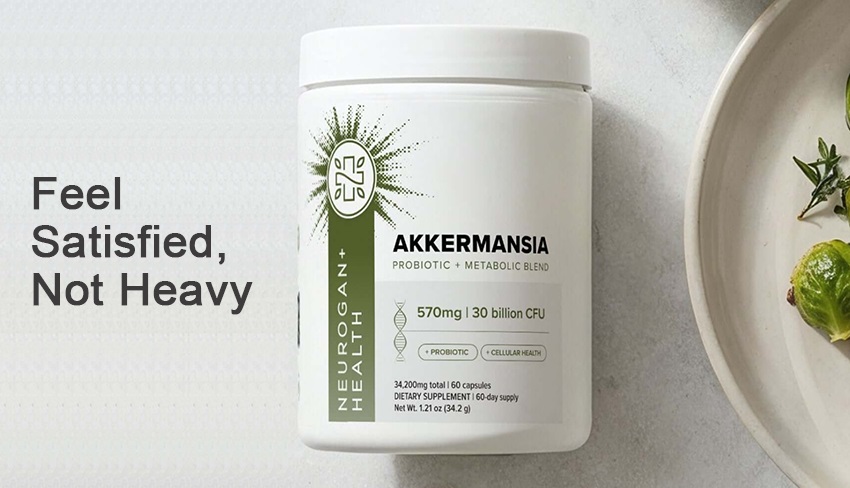
The discovery of Amuc_1100 as a primary bioactive component of Akkermansia introduced a pathway with a molecular specificity unusual in probiotic research. This outer membrane protein interacts directly with toll-like receptor 2 on intestinal epithelial cells, improving tight junction protein expression, modulating local immune signaling, and influencing the activity of enteroendocrine cells including GLP-1-producing L-cells through mechanisms still being fully characterized. Its activity persists through pasteurization, which is why heat-treated Akkermansia retains metabolic potency despite the bacteria being non-viable. Amuc_1100’s contribution to the GLP-1 support picture is distinct from the mucus layer structural pathway because it operates through a specific protein-receptor interaction rather than through the physical consequences of mucosal maintenance. It also represents the mechanistic layer most clearly differentiated from anything in berberine’s pathway profile, since berberine has no equivalent protein-receptor interaction with gut epithelial toll-like receptors.
Where the Pathways Converge and What the Convergence Produces
Mapping berberine’s GLP-1 pathways against Akkermansia’s GLP-1 pathways reveals a pattern that explains why the combination is genuinely complementary rather than merely additive of similar effects. Of the eight distinct pathways identified across both supplements, only one pair, berberine’s microbiome remodeling and Akkermansia’s cross-feeding ecology, overlaps meaningfully, and even there the mechanisms approach the same ecological destination from different network positions rather than operating through identical mechanisms. The other six pathways are functionally independent of each other, addressing different layers of the GLP-1 production system without redundancy.
The practical consequence of this non-overlapping pathway architecture is that combining berberine and Akkermansia engages the GLP-1 system at more points of potential failure simultaneously than any single natural intervention can achieve. L-cells receive direct chemical stimulation and enzyme-mediated preservation of their secretory product from berberine, while operating in a structurally maintained environment with lower inflammatory suppression and richer SCFA signaling from Akkermansia. The systemic hormonal circuit from L-cell secretion through bloodstream transport to receptor activation in the pancreas, gut wall, and brain functions in a lower-inflammation, better-insulin-sensitive metabolic environment because both supplements are independently contributing to reducing the obstacles in that circuit.
Frequently Asked Questions
Which of the Eight Pathways Has the Strongest Individual Clinical Evidence?
Berberine’s DPP-4 inhibition and direct L-cell stimulation pathways have the most extensively documented human clinical evidence, with multiple randomized controlled trials measuring postprandial GLP-1 concentrations as direct endpoints. Akkermansia’s gut barrier pathway, as measured by reduced metabolic endotoxemia markers, has the most direct human clinical evidence among its mechanisms, documented in the 2019 Nature Medicine trial. Berberine’s AMPK activation pathway has robust evidence for its downstream metabolic outcomes (insulin sensitivity, hepatic glucose reduction) without always measuring AMPK activation directly in clinical settings. The cross-feeding ecology pathways of both supplements have strong mechanistic evidence from microbiome research but less direct clinical measurement.
Does Understanding All Eight Pathways Change How the Supplements Should Be Taken?
It reinforces rather than changes the practical guidance. Berberine’s acute L-cell stimulation and DPP-4 inhibition pathways are most relevant in the postprandial window, supporting meal-aligned dosing. Akkermansia’s structural pathways develop gradually and benefit from daily consistent supplementation regardless of meal timing. The microbiome pathways of both develop over weeks and are amplified by dietary fiber and polyphenols that support SCFA-producing bacterial communities. Nothing in the pathway analysis suggests dosing approaches different from what the clinical evidence already indicates, but understanding why those approaches are recommended makes it easier to follow them consistently and evaluate results against appropriate timelines for each mechanism.
If Someone Has Good Gut Barrier Integrity, Do They Still Benefit from Akkermansia?
Yes, though the benefit from Akkermansia’s barrier restoration pathway will be smaller for someone whose barrier is already intact. The cross-feeding ecology pathway, mucus layer maintenance, and Amuc_1100-mediated enteroendocrine modulation all operate independently of whether barrier dysfunction is a significant pre-existing problem. Akkermansia’s GLP-1 support through SCFA amplification and L-cell environment quality improvement is relevant for a broad population, not just those with compromised gut barriers. The magnitude of benefit from each specific pathway scales with how impaired that pathway’s function was at baseline.