

The title makes a promise, so let’s be upfront about what it means. “Blow your mind” in the context of a health article could mean breathless overclaiming about a plant that cures everything short of gravity. That’s not what this is. What it means here is that soursop graviola has a benefit profile that genuinely surprises most people who encounter it for the first time, not because it does impossible things, but because the range and depth of what it legitimately does far exceeds what you’d expect from a single tropical fruit. A plant that earns real scientific attention for its effects on the immune system, the digestive tract, the cardiovascular system, the nervous system, blood sugar metabolism, skin health, and cellular aging simultaneously isn’t making extraordinary claims. It’s delivering an extraordinary profile.
Each of the ten benefits below reflects a distinct mechanism, a different body system, or a uniquely compelling aspect of soursop’s story. Read through all ten and see if the accumulation doesn’t shift your sense of what this plant is capable of.
Contents
- 1. It Contains Compounds Found Nowhere Else on Earth
- 2. Its Antioxidant Network Is Layered in a Way Most Plants Can’t Match
- 3. It Targets Inflammation Through Multiple Biological Doorways
- 4. It Has Been Independently Validated Across Five Continents
- 5. It Inhibits the Same Enzymes as Certain Diabetes Medications, Naturally
- 6. It Protects the Cells That Produce Your Insulin
- 7. Its Calming Properties Have Been Trusted Across Cultures for Centuries
- 8. It Feeds the Microbiome That Controls More Than You Realize
- 9. It May Protect Your Brain as You Age
- 10. The More Carefully You Look at It, the Better It Holds Up
- Frequently Asked Questions
- Are All Ten of These Benefits Supported by Clinical Human Trials?
- Which of the Ten Benefits Is Most Likely to Affect My Daily Life?
- Is Soursop Graviola Safe Given How Many Effects It Has?
- How Does Soursop Deliver So Many Benefits from One Source?
- What Is the Best Way to Get Soursop Graviola’s Benefits Consistently?
1. It Contains Compounds Found Nowhere Else on Earth
Start with the detail that stops most people cold when they first encounter it. Soursop graviola belongs to the Annonaceae plant family, and this family produces a class of bioactive molecules called annonaceous acetogenins that do not exist in any other plant family on the planet. They are structurally unique, biochemically distinctive, and pharmacologically active in ways that have attracted sustained research attention for three decades. No other fruit you can put in a smoothie, no other botanical you can find in a supplement aisle, contains them. Soursop is the only widely accessible source. That exclusivity alone makes soursop worth knowing about, but it becomes particularly interesting when you add what the acetogenin research has actually found: that these compounds exhibit potent biological activity at the cellular level, including the ability to inhibit certain cellular energy pathways in ways that have drawn significant attention from researchers studying abnormal cell behavior. The science is still developing, and the clinical implications are still being worked out. But unique compounds with established bioactivity found in exactly one place represent something genuinely worth paying attention to.
2. Its Antioxidant Network Is Layered in a Way Most Plants Can’t Match
Soursop doesn’t just contain antioxidants. It contains several distinct classes of antioxidant compounds that operate through different mechanisms and protect different cellular environments simultaneously. Vitamin C handles water-soluble environments and provides direct free radical scavenging while supporting immune cell integrity. Quercetin and luteolin work through flavonoid-specific pathways, modulating enzyme activity and gene expression related to oxidative stress response. Rutin and tangeretin contribute additional flavonoid-class antioxidant activity. Phenolic acids add another layer of protection through hydrogen atom transfer mechanisms. And the acetogenins themselves demonstrate antioxidant properties that are distinct from all of the above. The result is an antioxidant system that addresses the full spectrum of oxidative threat rather than one slice of it, which is a fundamentally different and more comprehensive form of cellular protection than any isolated antioxidant supplement provides. Free radicals come in different types. Soursop neutralizes more of them than most single botanical sources can reach.
3. It Targets Inflammation Through Multiple Biological Doorways
Chronic inflammation is not a single event. It is a cascading biological process that involves cytokine production, inflammatory enzyme activity, immune cell behavior, oxidative stress amplification, and transcription factor regulation, among other mechanisms. Most anti-inflammatory supplements address one or two of these pathways. Soursop addresses several of them simultaneously through different compounds. Quercetin inhibits NF-kB, the master regulator of inflammatory gene expression, while also suppressing cyclooxygenase and lipoxygenase enzymes. Luteolin reduces cytokine production in intestinal and neural tissue and inhibits mast cell activation. The antioxidant network breaks the cycle between oxidative stress and inflammatory amplification. The result is an anti-inflammatory profile broad enough to be relevant to systemic chronic inflammation rather than just localized acute flares, which is the kind that most modern adults are actually contending with.
4. It Has Been Independently Validated Across Five Continents
This is the benefit that tends to land hardest for skeptics, and it deserves to be understood properly. Soursop graviola’s healing properties were not discovered by a single culture, documented by a single tradition, or promoted by a single commercial interest. Caribbean communities, South American indigenous peoples, West African traditional practitioners, Southeast Asian healers, and Pacific island communities all arrived at overlapping applications for this plant independently, without contact with each other, without shared theoretical frameworks, and without any commercial incentive to agree. They all found that soursop was useful for digestive complaints, inflammatory conditions, restlessness and sleep difficulties, and infectious illness. The probability that five separate cultural traditions in different parts of the world would independently converge on the same plant for the same applications by accident is essentially zero. What that cross-cultural convergence represents is centuries of real-world clinical observation conducted at population scale. Modern research is now providing the biochemical explanations for what those traditions were accurately recording.
5. It Inhibits the Same Enzymes as Certain Diabetes Medications, Naturally
Alpha-glucosidase and alpha-amylase are the digestive enzymes responsible for breaking complex carbohydrates down into absorbable glucose. Inhibiting them slows the rate at which blood sugar rises after a carbohydrate-containing meal, which is the mechanism behind a class of pharmaceutical medications used for blood sugar management including acarbose and miglitol. Laboratory research has found that soursop extracts inhibit both alpha-glucosidase and alpha-amylase activity with meaningful potency. This is not a vague “may support blood sugar” claim. It is a specific, identified mechanism, operating on a characterized biological target, that produces a defined and measurable outcome in laboratory testing. The human clinical evidence is still developing, and soursop is not a replacement for prescribed diabetes medication. But the fact that it operates through a mechanism specific enough to share its target with pharmaceutical interventions is the kind of research finding that makes metabolic wellness practitioners sit up and pay attention.
6. It Protects the Cells That Produce Your Insulin
Pancreatic beta cells produce insulin, and their progressive dysfunction is at the heart of type 2 diabetes progression. Oxidative stress is one of the primary drivers of beta cell damage, because these cells are metabolically active and operate in a high-demand environment that makes them particularly vulnerable to free radical injury. Soursop’s antioxidant network, including vitamin C, quercetin, and the acetogenins, provides the kind of protective cellular environment that helps shield beta cells from oxidative damage. Animal research examining soursop’s effects on pancreatic tissue has found histological evidence of reduced beta cell damage in treated animals compared to controls. This isn’t a secondary or incidental benefit. It’s a direct contribution to preserving the biological infrastructure that blood sugar regulation depends on, which makes soursop relevant to metabolic health at a level deeper than simply moderating post-meal glucose spikes.
7. Its Calming Properties Have Been Trusted Across Cultures for Centuries
In an era of pharmaceutical sleep aids and prescription anxiolytics, the idea that a tropical fruit has meaningful calming properties can sound improbable. The traditional evidence says otherwise, and the volume of it is striking. Soursop leaf tea prepared for sleep and nervous tension is a remedy documented independently across Caribbean communities, Brazilian traditional medicine, West African healing traditions, and Southeast Asian folk practice. The consistency of this application across traditions with no historical contact with each other is exactly the kind of cross-cultural signal that researchers treat as meaningful. Proposed mechanisms include possible serotonergic pathway interactions, the well-established role of magnesium in muscle relaxation and sleep architecture, and the reduction of the physiological stress burden that chronic inflammation creates. Users who approach soursop supplementation specifically for sleep or stress resilience often find it one of the more personally significant benefits, arriving gradually but accumulating into something that registers as genuinely different from their pre-supplementation baseline.
8. It Feeds the Microbiome That Controls More Than You Realize
The gut microbiome influences immune function, mood, metabolic health, inflammatory tone, cognitive clarity, and skin condition, among other systems. This is not wellness hyperbole. It is the emerging consensus of a research field that has produced some of the most consequential findings in contemporary biology over the past two decades. Soursop’s prebiotic fiber feeds the beneficial bacterial strains, including Lactobacillus and Bifidobacterium species, that keep this system in the state it needs to be in to exert those far-reaching effects. When those bacteria metabolize soursop’s fiber, they produce butyrate, propionate, and acetate, short-chain fatty acids that nourish the colonocytes lining the gut, maintain the intestinal barrier integrity that prevents inflammatory compounds from entering the bloodstream, and regulate immune signaling in ways that reduce systemic inflammatory burden. A supplement that contributes to that upstream microbiome nourishment is contributing to a cascade of downstream health outcomes that extends well beyond anything visible in the gut itself.
9. It May Protect Your Brain as You Age
Neurodegeneration and age-related cognitive decline are among the most feared consequences of aging, and they share common upstream drivers: oxidative stress in neural tissue, neuroinflammation, and the progressive failure of cellular protective mechanisms to keep pace with the damage they’re meant to prevent. Animal studies have found that soursop leaf extract reduces measurable oxidative stress markers in brain tissue and may help protect neurons from inflammatory and oxidative damage. Some researchers have pointed to the acetogenins as compounds of particular neurological interest, given their known bioactivity and their capacity to influence cellular energy metabolism in ways that may be relevant to neuronal health. The research is early stage and primarily animal-based, and significant caution is warranted about overstating what it establishes. What it does establish is that soursop’s antioxidant and anti-inflammatory compounds are active in neural tissue, and that the direction of the findings in that context is consistently protective. For a supplement already delivering a broad range of benefits, the possibility of contributing to long-term brain health adds a dimension that makes soursop genuinely compelling in the context of aging.
10. The More Carefully You Look at It, the Better It Holds Up
The tenth benefit is the one that only becomes apparent after engaging seriously with the previous nine. Most wellness ingredients, when you press on them hard enough, begin to show cracks: research that doesn’t replicate, mechanisms that are less specific than they seemed, traditional uses that don’t align with what the science finds, or a profile that reduces to one or two credible claims surrounded by softer ones. Soursop is unusual in the supplement world because careful scrutiny consistently strengthens rather than weakens its case. The traditional use evidence is extensive and cross-cultural. The mechanistic research is specific and well-characterized. The nutritional profile is diverse and multi-system. The compounds are real, identifiable, and increasingly well-understood. The research base, while still developing its human clinical dimension, is consistent across independent groups in different countries using different methodologies and arriving at comparable conclusions.
In an industry where impressive-sounding claims are cheap and scrutiny-resistant ones are rare, a botanical that rewards careful examination rather than wilting under it is precisely the kind of thing that deserves a place in a serious wellness conversation. Soursop graviola is that botanical. Ten reasons in, the case for it is stronger than it was at the beginning. That’s the definition of a benefit that will genuinely blow your mind.
Frequently Asked Questions
Here are the questions most commonly asked by people encountering soursop graviola’s benefit profile for the first time and wanting to know more before they commit to a supplement.
Are All Ten of These Benefits Supported by Clinical Human Trials?
Not all of them, and that distinction matters. Soursop’s antioxidant capacity, anti-inflammatory mechanisms, antimicrobial properties, enzyme inhibitory activity, and traditional use history are well-documented. Most of the mechanistic research has been conducted in laboratory settings and animal models. Human clinical trials are still limited across most of these benefit areas, which is an honest gap in the current evidence base. The mechanistic specificity and cross-cultural traditional evidence strengthen the case beyond what animal models alone would support, but human clinical confirmation is the next necessary step in soursop’s research journey.
Which of the Ten Benefits Is Most Likely to Affect My Daily Life?
That depends on where your greatest health priorities lie. For most people, the digestive benefits tend to arrive earliest and are the most immediately noticeable. The anti-inflammatory effects on joint comfort and general physical ease build over weeks and become meaningful over months. The metabolic benefits related to blood sugar moderation may be most practically relevant for people already monitoring post-meal energy crashes or metabolic markers. The sleep and relaxation benefits arrive gradually but accumulate into something many users describe as one of their most valued outcomes of consistent supplementation.
Is Soursop Graviola Safe Given How Many Effects It Has?
A broad benefit profile is sometimes interpreted as a red flag for safety, on the logic that anything affecting so many systems must carry proportionate risks. In soursop’s case, the multi-system activity reflects the natural complexity of a whole-plant botanical rather than the targeted potency of a pharmaceutical agent. For most healthy adults taking soursop at recommended doses, the plant is well tolerated. The main safety consideration involves very high doses over extended periods, which have raised questions in research settings regarding certain alkaloid compounds.
How Does Soursop Deliver So Many Benefits from One Source?
The answer lies in the diversity of soursop’s phytochemical composition. Unlike a single-compound supplement targeting one pathway, soursop contains multiple distinct compound classes, including vitamin C, B vitamins, minerals, flavonoids, phenolic acids, and the unique acetogenins, each of which interacts with a different biological system through a different mechanism. A plant that evolved in a complex tropical ecosystem over millions of years has developed a phytochemical toolkit of corresponding complexity. That complexity, expressed through a diverse array of bioactive compounds, is what allows a single botanical source to address multiple body systems with genuine, mechanistically specific effects.
What Is the Best Way to Get Soursop Graviola’s Benefits Consistently?
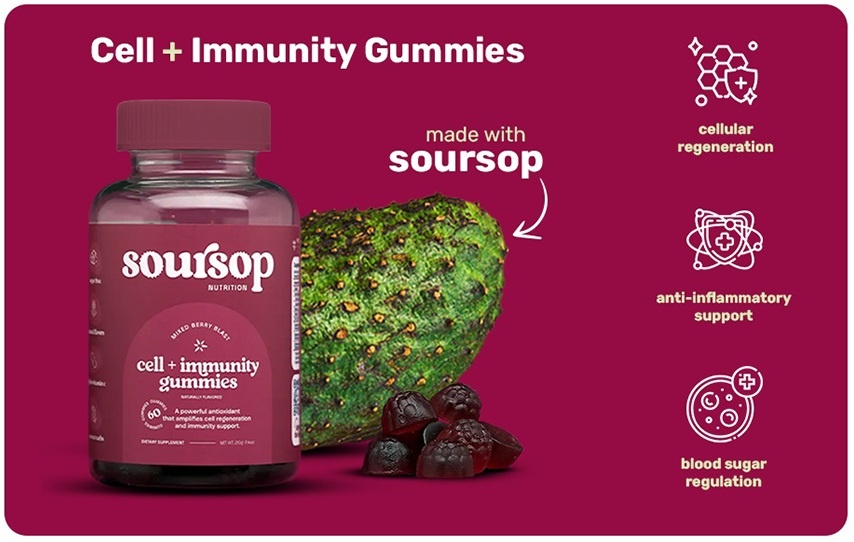
For most people outside of tropical growing regions, a high-quality supplement is the most practical answer. Fresh soursop is highly perishable and difficult to source consistently. A well-formulated soursop supplement, ideally one using standardized leaf extract with disclosed active compound concentrations, third-party testing verification, and natural ingredients throughout, delivers the plant’s bioactive compounds in a concentrated, consistent, and convenient form. The gummy format has become particularly popular because its enjoyable flavor and low daily friction make consistent supplementation more sustainable than other formats for most people, and consistency is what allows soursop’s cumulative benefits to fully express themselves over time.